
How to maintain Balanced Posture: Biomechanical Understanding by Neeraj Mehta (Ph.D., Human Biomechanics & Alternative Medicine)
What is Balance | State of Equilibrium
In a state of equilibrium, two opposing forces are equal in strength and cancel each other out, resulting in a stable condition. According to biomechanics, a person’s ability to maintain a stable postural position while maintaining a stable body’s line of gravity within the base of support is what is meant by the term “balance.” Both injuries and performance are affected by an athlete’s ability to maintain balance. It is possible to fall and injure yourself if you don’t retain your footing.
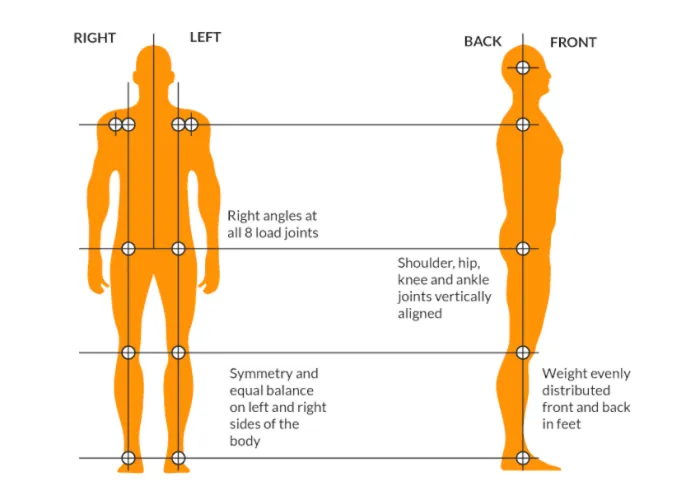
What is posture?
The way a person positions their body whether standing or sitting or in other words “the posture refers to the present position of the body”. An optimum posture is characterised by stability, minimum localised tissue tension, and low energy expenditure. Our posture is continually moving in order to allow us to move, change the strain on tissues, and maintain stability. Good posture may be achieved with good balance. The capacity to regulate and maintain your body’s position, as well as your posture and movement, is improved via the practice of balance exercises. All the positions of the body’s joints are summed up in posture. Maintaining body segments’ stability in the face of stressors that endanger their structural integrity is called postural control.
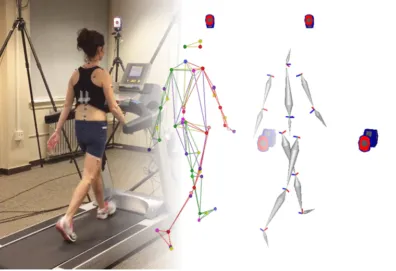
What is posture in the best possible way?
Lower Body Position in the ideal Posture
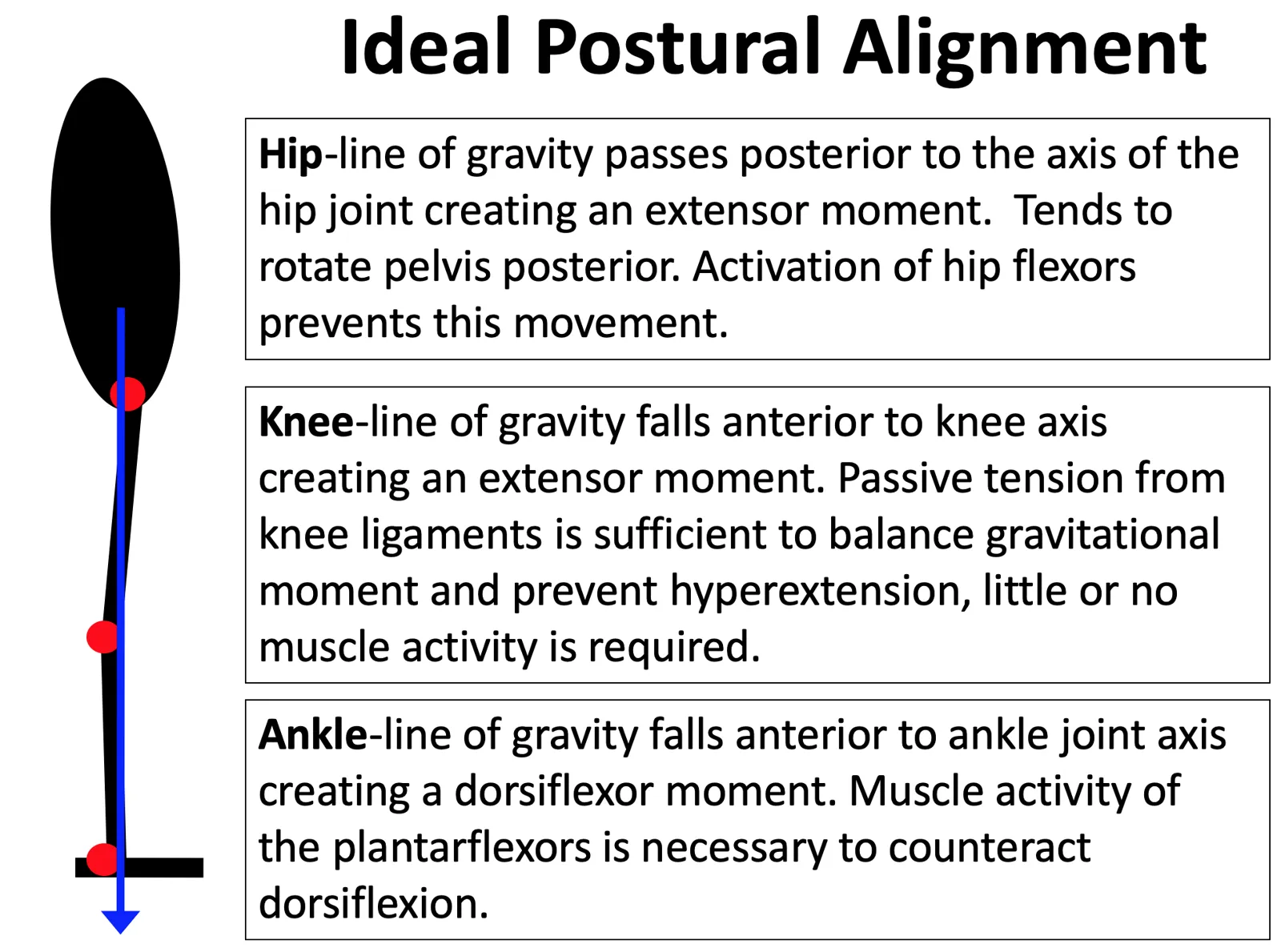
Postural abnormalities in the lower body are commonly examined in relation to what is referred to as “normal” or “optimal” posture, which shows little torque at the body’s primary joints. In the sagittal plane, the gravity line is located anterior to the ankle joint, causing a dorsiflexion moment in the ankle that must be countered by a plantar flexion moment. There is a knee extensor moment due to a line of gravity descending anterior to the knee. Since our knees are locked in the upright position, this extension is prevented by passive tension in the posterior knee ligaments, which does not need muscular effort. There is a hip extensor moment that is balanced by the passive tension of the iliofemoral ligament, which does not need any muscular effort to perform.
Upper Body Position in the ideal Posture
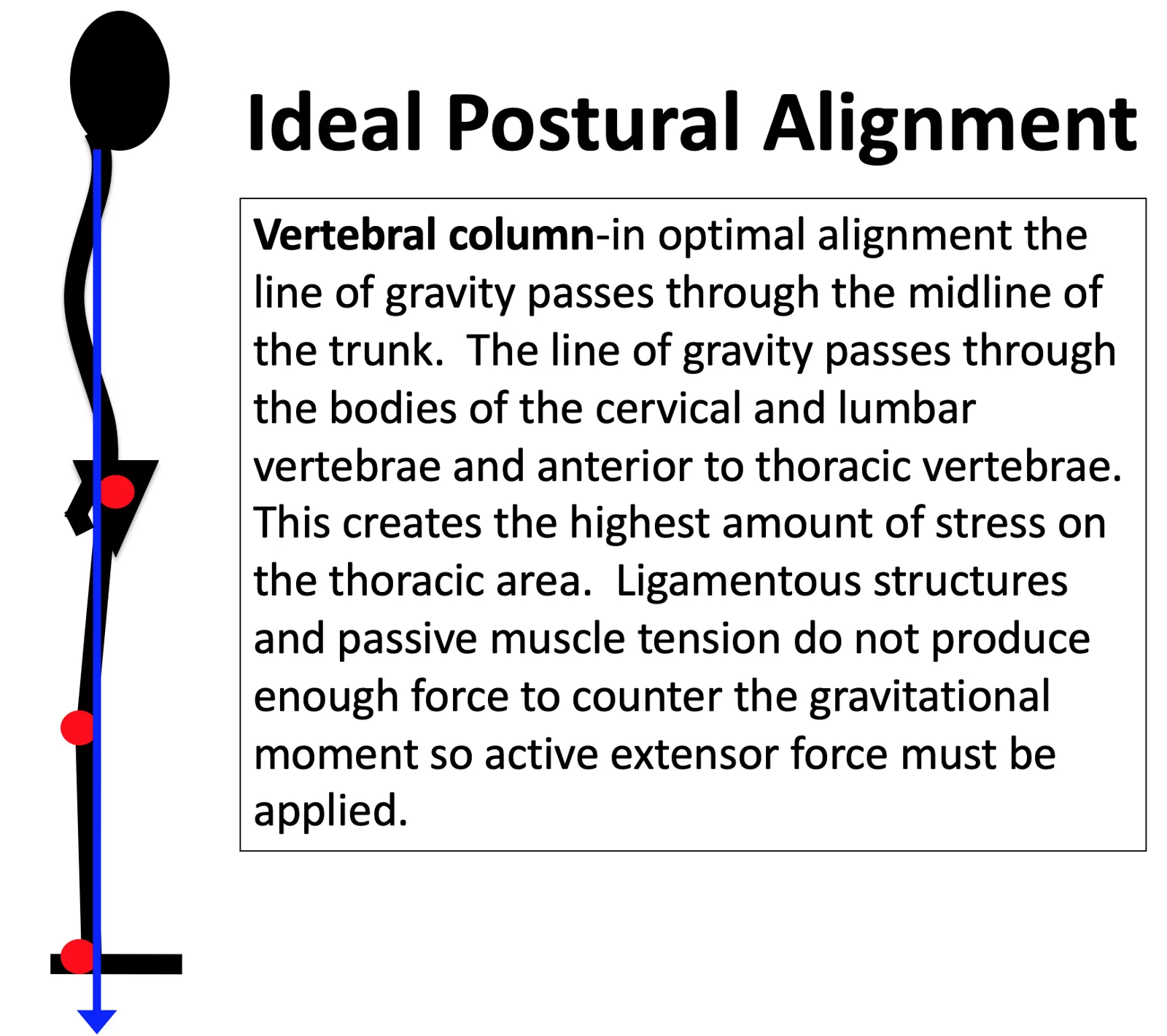
There is a lot of emphasis on good spinal posture in the upper body. The best posture is one in which the line of gravity crosses the middle of the trunk. In the sagittal plane, gravity passes through the vertebral bodies of the cervical and lumbar regions before reaching the thoracic region. In this position, the thoracic area is most strained, and the goal is to further curve the thoracic region. In order to offset the gravitational force, the back extensors must be activated, which means that the ligamentous structures and passive muscular tension are inadequate.
Injuries Caused by Bad Posture
A faulty posture’s side effects include slouching or slumping. In addition, there are physical repercussions
Messages from the sciatic nerve are impeded when you have poor posture, which puts stress on your muscles and bones. Sciatica, which is characterized by pain down the back of the thigh, calves, and foot, may develop over time in certain individuals.
The lower back muscles, especially the posterior chain, are placed under a lot of strain by poor posture. You may develop hyperlordosis in the long run if you have a weak core, which weakens your hip stability and extension.
The surgical spine, shoulders, and neck are all placed under a lot of stress by constantly looking down at a computer or cell phone.
Fluids, including blood, flow more slowly through your body if you have poor posture. The digestive and vascular systems may suffer, as well as your blood pressure and cholesterol levels, if your circulation isn’t up to par.
If you don’t address the imbalances that lead to poor posture, you might injure your muscles and joints when working out.
Stability Factors Influenced by Biomechanical Factors
Our study of stability-related biomechanical factors will now take place in light of what we’ve learned so far about balance. Topics to be covered include the following:
Mass:
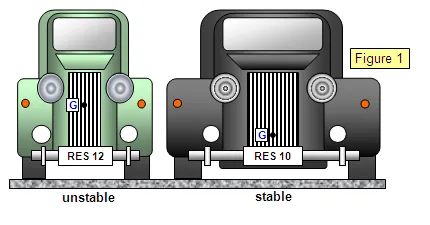
Size matters, and larger objects are more stable than lighter ones. This is a fundamental tenet of balancing. Increasing the object’s bulk is a common strategy for ensuring its stability, because larger objects are more stable and difficult to move. For example, sumo wrestlers and football defensive linemen are more stable because of their enormous mass. It’s not always possible to add heft, and if it is, it might hamper mobility.
Base of Support:
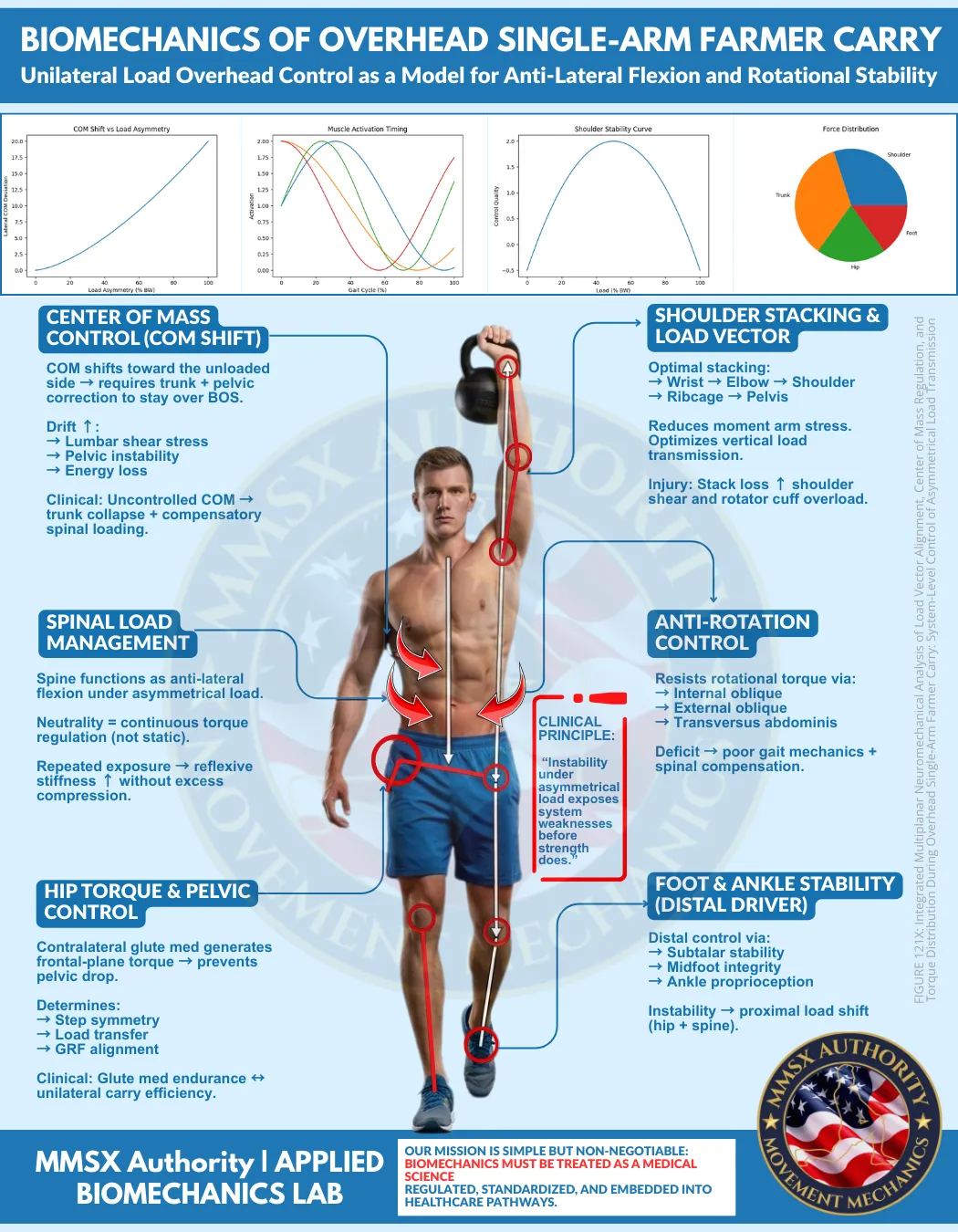
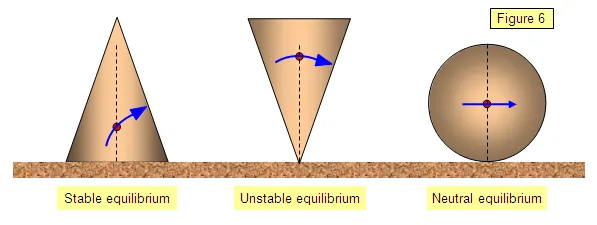
When a piece of equipment makes contact with a support surface, the points of contact form a perimeter called the BOS. The BOS is a crucial concept to learn in order to understand a person’s ability to maintain equilibrium. When a person’s axis of gravity deviates from the BOS, they experience a fall. In order to retain our center of mass inside the BOS, we may adjust our posture in various ways to change the size of the BOS. When a destabilizing torque is applied, we may increase the BOS’s size in the direction of the destabilizing force to maintain stability. The term “growing your stance” refers to this. The stabilizing moment arm rises in bigger as a result of the BOS’s increased breadth, which boosts the stabilizing torque and aids in a person’s stability.
Height of COM:
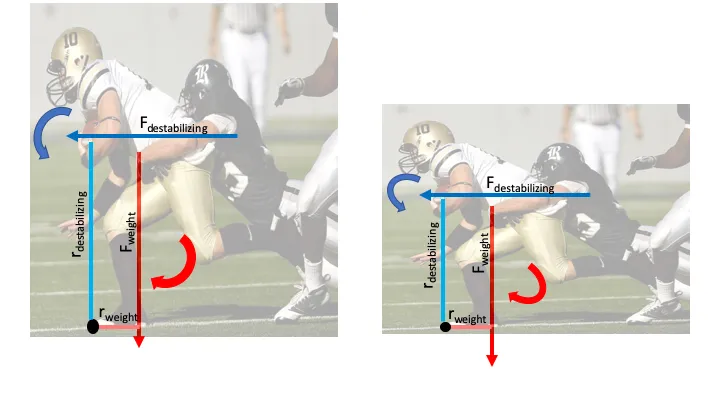
“Lower your center of mass” is a common instruction in sports where stability is essential (e.g. football, hockey, soccer). Destabilizing torque is reduced by lowering the COM, which decreases the destabilizing moment arm. Having a less destabilizing torque means a greater likelihood of preserving stability with the stabilizing torque.
Static and Dynamic Stability:
Static equilibrium has been the primary focus of the study of balance and stability to until. Dynamic stability, on the other hand, refers to situations in which movement-induced forces help preserve stability. Alternate forces (inertial, centripetal, and kinetic friction) counteract torques when the line of gravity is outside the BOS.
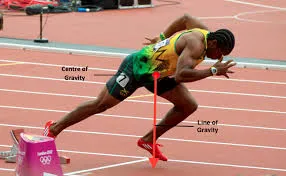
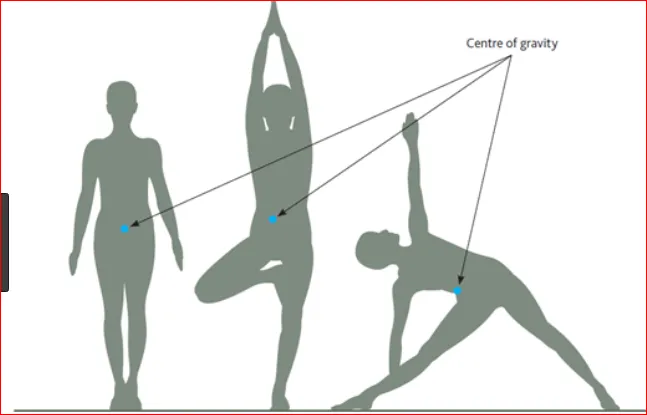
Keep in mind that posture relates to the body’s current position. Stability, minimal localized tissue stress, and low energy expenditure are all characteristics of an ideal posture. Our posture is constantly shifting in order to move, alter the tension on tissues, and help us maintain stability. This force’s effects on the body’s various segments may be studied using the line of gravity (weight force vector) as a reference. In this method, the direction of rotation of the weight force vector may be determined based on where the line of gravity lies in regard to a joint.
संतुलित मुद्रा कैसे बनाए रखें: बायोमैकेनिकल समझ — डॉ. नीरज मेहता, PhD (मानव बायोमैकेनिक्स एवं वैकल्पिक चिकित्सा)
संतुलन क्या है | साम्यावस्था (Equilibrium) की स्थिति
साम्यावस्था की स्थिति में दो विरोधी बल समान शक्ति के होते हैं और एक-दूसरे को निष्प्रभावी कर देते हैं, जिसके परिणामस्वरूप एक स्थिर अवस्था बनती है। बायोमैकेनिक्स के अनुसार, आधार-क्षेत्र (base of support) के भीतर शरीर की गुरुत्व-रेखा (line of gravity) को स्थिर बनाए रखते हुए एक स्थिर मुद्रा-स्थिति बनाए रखने की व्यक्ति की क्षमता को ही “संतुलन (balance)” शब्द से अभिप्रेत किया जाता है। किसी एथलीट की संतुलन बनाए रखने की क्षमता चोटों और प्रदर्शन, दोनों को प्रभावित करती है। यदि आप अपना पैर-जमाव (footing) बनाए नहीं रखते, तो आप गिरकर स्वयं को घायल कर सकते हैं।
मुद्रा (Posture) क्या है?
कोई व्यक्ति खड़े होने, बैठने या अन्य स्थितियों में अपने शरीर को जिस प्रकार व्यवस्थित करता है — दूसरे शब्दों में, “मुद्रा शरीर की वर्तमान स्थिति को संदर्भित करती है”। एक इष्टतम मुद्रा की विशेषताएँ हैं स्थिरता, न्यूनतम स्थानीय ऊतक-तनाव और कम ऊर्जा-व्यय। हमें गति करने, ऊतकों पर पड़ने वाले तनाव को बदलने और स्थिरता बनाए रखने में सक्षम बनाने के लिए हमारी मुद्रा निरंतर परिवर्तित होती रहती है। अच्छे संतुलन से अच्छी मुद्रा प्राप्त की जा सकती है। संतुलन व्यायामों के अभ्यास से आपके शरीर की स्थिति, साथ ही आपकी मुद्रा और गति को नियंत्रित करने तथा बनाए रखने की क्षमता में सुधार होता है। शरीर के जोड़ों की सभी स्थितियों का समग्र रूप ही मुद्रा है। शरीर के खंडों (body segments) की संरचनात्मक अखंडता को संकट में डालने वाले तनावकारकों के समक्ष उनकी स्थिरता बनाए रखना मुद्रा-नियंत्रण (postural control) कहलाता है।
सर्वोत्तम संभव मुद्रा क्या है?
आदर्श मुद्रा में निचले शरीर की स्थिति
निचले शरीर की मुद्रा-संबंधी असामान्यताओं की जाँच सामान्यतः उस मुद्रा के संदर्भ में की जाती है जिसे “सामान्य” या “इष्टतम” मुद्रा कहा जाता है, जिसमें शरीर के प्रमुख जोड़ों पर न्यूनतम बल-आघूर्ण (torque) होता है। सैजिटल तल (sagittal plane) में गुरुत्व-रेखा टखने के जोड़ के अग्र भाग में स्थित होती है, जिससे टखने में एक डॉर्सीफ़्लेक्शन आघूर्ण (dorsiflexion moment) उत्पन्न होता है, जिसका प्रतिकार प्लांटर फ़्लेक्शन आघूर्ण (plantar flexion moment) द्वारा करना होता है। घुटने के अग्र भाग से नीचे उतरती गुरुत्व-रेखा के कारण घुटने में एक एक्सटेंसर आघूर्ण (knee extensor moment) होता है। चूँकि सीधी खड़ी स्थिति में हमारे घुटने लॉक रहते हैं, इसलिए यह विस्तार (extension) घुटने के पश्च स्नायुबंधनों (posterior knee ligaments) के निष्क्रिय तनाव द्वारा रोका जाता है, जिसके लिए मांसपेशीय प्रयास की आवश्यकता नहीं होती। एक हिप एक्सटेंसर आघूर्ण होता है जो इलियोफ़ेमोरल स्नायुबंधन (iliofemoral ligament) के निष्क्रिय तनाव द्वारा संतुलित होता है, जिसके लिए किसी मांसपेशीय प्रयास की आवश्यकता नहीं होती।
आदर्श मुद्रा में ऊपरी शरीर की स्थिति
ऊपरी शरीर में अच्छी मेरुदंडीय मुद्रा (spinal posture) पर अत्यधिक बल दिया जाता है। सर्वोत्तम मुद्रा वह है जिसमें गुरुत्व-रेखा धड़ के मध्य से होकर गुज़रती है। सैजिटल तल में गुरुत्व वक्षीय क्षेत्र (thoracic region) तक पहुँचने से पहले ग्रीवा (cervical) और कटि (lumbar) क्षेत्रों के कशेरुका-काय (vertebral bodies) से होकर गुज़रता है। इस स्थिति में वक्षीय क्षेत्र पर सर्वाधिक तनाव होता है, और प्रवृत्ति वक्षीय क्षेत्र को और अधिक वक्रित करने की होती है। गुरुत्वीय बल का प्रतिकार करने के लिए पीठ के एक्सटेंसरों को सक्रिय करना आवश्यक होता है, जिसका अर्थ है कि स्नायुबंधन संरचनाएँ और निष्क्रिय मांसपेशीय तनाव अपर्याप्त हैं।
ख़राब मुद्रा से होने वाली चोटें
दोषपूर्ण मुद्रा के दुष्प्रभावों में झुककर या ढीले होकर बैठना-खड़ा होना शामिल है। इसके अतिरिक्त, इसके शारीरिक परिणाम भी होते हैं
जब आपकी मुद्रा ख़राब होती है, तो साइटिक तंत्रिका (sciatic nerve) के संदेश बाधित होते हैं, जिससे आपकी मांसपेशियों और हड्डियों पर तनाव पड़ता है। कुछ व्यक्तियों में समय के साथ साइटिका विकसित हो सकता है, जिसकी विशेषता जाँघ के पिछले भाग, पिंडलियों और पैर में नीचे की ओर जाता दर्द है।
ख़राब मुद्रा के कारण कमर के निचले हिस्से की मांसपेशियों, विशेषकर पश्च शृंखला (posterior chain) पर अत्यधिक तनाव पड़ता है। यदि आपका कोर कमज़ोर है, तो दीर्घकाल में आपको हाइपरलॉर्डोसिस (hyperlordosis) विकसित हो सकता है, जो आपकी हिप स्थिरता और विस्तार को कमज़ोर करता है।
लगातार कंप्यूटर या मोबाइल फ़ोन की ओर नीचे देखते रहने से सर्जिकल स्पाइन, कंधों और गर्दन, सभी पर अत्यधिक तनाव पड़ता है।
यदि आपकी मुद्रा ख़राब है, तो रक्त सहित शरीर के द्रव अधिक धीमी गति से प्रवाहित होते हैं। यदि आपका रक्त-संचार उचित स्तर का नहीं है, तो पाचन और संवहनी (vascular) तंत्र, साथ ही आपके रक्तचाप और कोलेस्ट्रॉल स्तर प्रभावित हो सकते हैं।
यदि आप उन असंतुलनों का समाधान नहीं करते जो ख़राब मुद्रा का कारण बनते हैं, तो वर्कआउट करते समय आप अपनी मांसपेशियों और जोड़ों को चोट पहुँचा सकते हैं।
बायोमैकेनिकल कारकों से प्रभावित स्थिरता-कारक
संतुलन के विषय में अब तक जो हमने सीखा है, उसके आलोक में अब हम स्थिरता से संबंधित बायोमैकेनिकल कारकों का अध्ययन करेंगे। जिन विषयों को शामिल किया जाएगा, वे इस प्रकार हैं:
द्रव्यमान (Mass):
आकार महत्वपूर्ण है, और बड़ी वस्तुएँ हल्की वस्तुओं की तुलना में अधिक स्थिर होती हैं। यह संतुलन का एक मूलभूत सिद्धांत है। किसी वस्तु की स्थिरता सुनिश्चित करने के लिए उसका भार बढ़ाना एक सामान्य रणनीति है, क्योंकि बड़ी वस्तुएँ अधिक स्थिर होती हैं और उन्हें हिलाना कठिन होता है। उदाहरण के लिए, सूमो पहलवान और फ़ुटबॉल के डिफ़ेंसिव लाइनमैन अपने विशाल द्रव्यमान के कारण अधिक स्थिर होते हैं। भार बढ़ाना सदैव संभव नहीं होता, और यदि संभव हो भी, तो यह गतिशीलता में बाधा डाल सकता है।
आधार-क्षेत्र (Base of Support):
जब कोई उपकरण किसी आधार-सतह के संपर्क में आता है, तो संपर्क-बिंदु एक परिधि बनाते हैं जिसे BOS कहा जाता है। किसी व्यक्ति की साम्यावस्था बनाए रखने की क्षमता को समझने के लिए BOS एक अत्यंत महत्वपूर्ण अवधारणा है। जब किसी व्यक्ति की गुरुत्व-अक्ष BOS से विचलित होती है, तो वह गिर जाता है। अपने द्रव्यमान-केंद्र (center of mass) को BOS के भीतर बनाए रखने के लिए हम विभिन्न तरीकों से अपनी मुद्रा समायोजित करके BOS का आकार बदल सकते हैं। जब कोई अस्थिरकारी बल-आघूर्ण (destabilizing torque) लगाया जाता है, तो स्थिरता बनाए रखने के लिए हम अस्थिरकारी बल की दिशा में BOS का आकार बढ़ा सकते हैं। इसे “अपना रुख़ (stance) चौड़ा करना” कहा जाता है। BOS की बढ़ी हुई चौड़ाई के परिणामस्वरूप स्थिरकारी आघूर्ण-भुजा (stabilizing moment arm) बड़ी हो जाती है, जिससे स्थिरकारी बल-आघूर्ण बढ़ता है और व्यक्ति की स्थिरता में सहायता मिलती है।
COM की ऊँचाई:
जिन खेलों में स्थिरता अनिवार्य है (जैसे फ़ुटबॉल, हॉकी, सॉकर), उनमें “अपना द्रव्यमान-केंद्र नीचे करें” एक सामान्य निर्देश है। COM को नीचे करने से अस्थिरकारी बल-आघूर्ण कम होता है, क्योंकि इससे अस्थिरकारी आघूर्ण-भुजा घटती है। अस्थिरकारी बल-आघूर्ण कम होने का अर्थ है कि स्थिरकारी बल-आघूर्ण के साथ स्थिरता बनाए रखने की संभावना अधिक है।
स्थैतिक और गतिशील स्थिरता:
अब तक संतुलन और स्थिरता के अध्ययन का प्राथमिक केंद्र स्थैतिक साम्यावस्था (static equilibrium) रहा है। दूसरी ओर, गतिशील स्थिरता (dynamic stability) उन स्थितियों को संदर्भित करती है जिनमें गति-जनित बल स्थिरता बनाए रखने में सहायता करते हैं। जब गुरुत्व-रेखा BOS के बाहर होती है, तो वैकल्पिक बल (जड़त्वीय, अभिकेंद्रीय और गतिज घर्षण) बल-आघूर्णों का प्रतिकार करते हैं।
ध्यान रखें कि मुद्रा शरीर की वर्तमान स्थिति से संबंधित है। स्थिरता, न्यूनतम स्थानीय ऊतक-तनाव और कम ऊर्जा-व्यय — ये सभी एक आदर्श मुद्रा की विशेषताएँ हैं। गति करने, ऊतकों पर तनाव को बदलने और स्थिरता बनाए रखने में हमारी सहायता के लिए हमारी मुद्रा निरंतर परिवर्तित होती रहती है। शरीर के विभिन्न खंडों पर इस बल के प्रभावों का अध्ययन गुरुत्व-रेखा (भार-बल सदिश — weight force vector) को संदर्भ के रूप में उपयोग करके किया जा सकता है। इस विधि में, किसी जोड़ के सापेक्ष गुरुत्व-रेखा कहाँ स्थित है, इसके आधार पर भार-बल सदिश की घूर्णन-दिशा निर्धारित की जा सकती है।
Cómo mantener una postura equilibrada: comprensión biomecánica, por Dr. Neeraj Mehta, PhD (Biomecánica Humana y Medicina Alternativa)
Qué es el equilibrio | Estado de equilibrio
En un estado de equilibrio, dos fuerzas opuestas tienen la misma magnitud y se anulan mutuamente, lo que da lugar a una condición estable. Según la biomecánica, el término «equilibrio» designa la capacidad de una persona para mantener una posición postural estable conservando la línea de gravedad corporal dentro de la base de sustentación. Tanto las lesiones como el rendimiento se ven afectados por la capacidad de un deportista para mantener el equilibrio. Si no conserva un apoyo firme, puede caerse y lesionarse.
¿Qué es la postura?
Es la forma en que una persona coloca su cuerpo, ya sea de pie, sentada o en otras posiciones; en otras palabras, «la postura se refiere a la posición actual del cuerpo». Una postura óptima se caracteriza por la estabilidad, una tensión tisular localizada mínima y un bajo gasto energético. Nuestra postura cambia continuamente para permitirnos movernos, modificar la carga sobre los tejidos y mantener la estabilidad. Una buena postura puede lograrse con un buen equilibrio. La práctica de ejercicios de equilibrio mejora la capacidad de regular y mantener la posición del cuerpo, así como la postura y el movimiento. La postura es la suma de todas las posiciones de las articulaciones del cuerpo. Se denomina control postural al mantenimiento de la estabilidad de los segmentos corporales frente a los factores de estrés que amenazan su integridad estructural.
¿Qué es la postura en su mejor expresión?
Posición del tren inferior en la postura ideal
Las alteraciones posturales del tren inferior suelen examinarse en relación con lo que se denomina postura «normal» u «óptima», que presenta un momento de torsión (torque) reducido en las principales articulaciones del cuerpo. En el plano sagital, la línea de gravedad se sitúa por delante de la articulación del tobillo, lo que genera un momento de dorsiflexión en el tobillo que debe contrarrestarse con un momento de flexión plantar. Existe un momento extensor de rodilla debido a que la línea de gravedad desciende por delante de la rodilla. Como nuestras rodillas se encuentran bloqueadas en la posición erguida, esta extensión queda limitada por la tensión pasiva de los ligamentos posteriores de la rodilla, que no requiere esfuerzo muscular. Existe un momento extensor de cadera que se equilibra mediante la tensión pasiva del ligamento iliofemoral, que tampoco requiere esfuerzo muscular alguno.
Posición del tren superior en la postura ideal
En el tren superior se otorga gran importancia a una buena postura de la columna vertebral. La mejor postura es aquella en la que la línea de gravedad atraviesa el centro del tronco. En el plano sagital, la gravedad pasa por los cuerpos vertebrales de las regiones cervical y lumbar antes de alcanzar la región torácica. En esta posición, la zona torácica es la más solicitada, y la tendencia es a acentuar la curvatura de la región torácica. Para contrarrestar la fuerza gravitatoria, deben activarse los extensores de la espalda, lo que significa que las estructuras ligamentosas y la tensión muscular pasiva resultan insuficientes.
Lesiones causadas por una mala postura
Entre los efectos secundarios de una postura defectuosa se encuentran el encorvamiento o el desplome postural. Además, existen repercusiones físicas
Cuando la postura es deficiente, se dificulta la transmisión de señales por el nervio ciático, lo que somete a estrés a los músculos y los huesos. En algunas personas puede desarrollarse con el tiempo una ciática, caracterizada por dolor en la parte posterior del muslo, las pantorrillas y el pie.
Una mala postura somete a una gran tensión a los músculos de la zona lumbar, especialmente a la cadena posterior. Si tiene un core débil, lo que debilita la estabilidad y la extensión de la cadera, puede desarrollar a largo plazo una hiperlordosis.
Mirar constantemente hacia abajo a la pantalla de un ordenador o de un teléfono móvil somete a un gran estrés a la columna cervical, los hombros y el cuello.
Si la postura es deficiente, los líquidos, incluida la sangre, circulan más lentamente por el cuerpo. Si la circulación no es adecuada, pueden verse afectados los sistemas digestivo y vascular, así como la presión arterial y los niveles de colesterol.
Si no corrige los desequilibrios que conducen a una mala postura, puede lesionarse músculos y articulaciones al entrenar.
Factores de estabilidad condicionados por factores biomecánicos
A la luz de lo aprendido hasta ahora sobre el equilibrio, abordaremos a continuación el estudio de los factores biomecánicos relacionados con la estabilidad. Se tratarán los siguientes temas:
Masa:
El tamaño importa, y los objetos de mayor masa son más estables que los más ligeros. Este es un principio fundamental del equilibrio. Aumentar la masa de un objeto es una estrategia habitual para garantizar su estabilidad, ya que los objetos de mayor masa son más estables y más difíciles de desplazar. Por ejemplo, los luchadores de sumo y los defensas de línea del fútbol americano son más estables debido a su enorme masa. No siempre es posible añadir masa y, cuando lo es, puede limitar la movilidad.
Base de sustentación:
Cuando un objeto entra en contacto con una superficie de apoyo, los puntos de contacto forman un perímetro denominado base de sustentación (BOS, base of support). La BOS es un concepto fundamental para comprender la capacidad de una persona para mantener el equilibrio. Cuando el eje de gravedad de una persona se desvía fuera de la BOS, se produce una caída. Para mantener nuestro centro de masa dentro de la BOS, podemos ajustar la postura de diversas formas que modifican el tamaño de la BOS. Cuando se aplica un momento de torsión desestabilizador, podemos aumentar el tamaño de la BOS en la dirección de la fuerza desestabilizadora para mantener la estabilidad. A esto se le denomina «ampliar la base de apoyo». El brazo de momento estabilizador (moment arm) aumenta como consecuencia de la mayor amplitud de la BOS, lo que incrementa el momento de torsión estabilizador y contribuye a la estabilidad de la persona.
Altura del centro de masa (COM):
«Baje su centro de masa» es una indicación habitual en los deportes en los que la estabilidad es esencial (p. ej., fútbol americano, hockey, fútbol). Al bajar el COM se reduce el momento de torsión desestabilizador, ya que disminuye el brazo de momento desestabilizador. Un momento de torsión desestabilizador menor implica una mayor probabilidad de preservar la estabilidad mediante el momento de torsión estabilizador.
Estabilidad estática y dinámica:
Hasta ahora, el estudio del equilibrio y la estabilidad se ha centrado principalmente en el equilibrio estático. La estabilidad dinámica, en cambio, se refiere a las situaciones en las que las fuerzas inducidas por el movimiento contribuyen a preservar la estabilidad. Cuando la línea de gravedad se encuentra fuera de la BOS, otras fuerzas (inerciales, centrípetas y de fricción cinética) contrarrestan los momentos de torsión.
Tenga presente que la postura se refiere a la posición actual del cuerpo. La estabilidad, una tensión tisular localizada mínima y un bajo gasto energético son características de una postura ideal. Nuestra postura cambia constantemente para movernos, modificar la tensión sobre los tejidos y ayudarnos a mantener la estabilidad. Los efectos de esta fuerza sobre los distintos segmentos del cuerpo pueden estudiarse tomando como referencia la línea de gravedad (vector de la fuerza peso). Con este método, el sentido de rotación que produce el vector de la fuerza peso puede determinarse según la posición de la línea de gravedad respecto a una articulación.
كيف تحافظ على وضعية متوازنة: فهم ميكانيكي حيوي بقلم د. نيراج ميهتا، PhD (الميكانيكا الحيوية البشرية والطب البديل)
ما التوازن | حالة الاتزان
في حالة الاتزان، تتساوى قوتان متعاكستان في الشدة ويُلغي كلٌّ منهما أثر الأخرى، مما ينتج عنه وضع مستقر. ووفقًا لعلم الميكانيكا الحيوية، فإن قدرة الشخص على الحفاظ على وضعية جسدية مستقرة مع إبقاء خط الجاذبية للجسم مستقرًا ضمن قاعدة الارتكاز هي المقصود بمصطلح «التوازن». وتتأثر الإصابات والأداء كلاهما بقدرة الرياضي على الحفاظ على توازنه. فمن الممكن أن تسقط وتُصاب إذا لم تحافظ على ثبات قدميك.
ما الوضعية؟
هي الطريقة التي يضع بها الشخص جسده سواء أكان واقفًا أم جالسًا، أو بعبارة أخرى «تشير الوضعية إلى الموضع الحالي للجسم». وتتسم الوضعية المثلى بالثبات، وأدنى قدر من التوتر الموضعي في الأنسجة، وانخفاض استهلاك الطاقة. وتتغير وضعيتنا باستمرار لتتيح لنا الحركة، وتغيير الإجهاد الواقع على الأنسجة، والحفاظ على الثبات. ويمكن تحقيق وضعية جيدة بتوازن جيد. وتتحسن القدرة على تنظيم موضع الجسم والحفاظ عليه، وكذلك الوضعية والحركة، من خلال ممارسة تمارين التوازن. وتُختزَل جميع أوضاع مفاصل الجسم في الوضعية. ويُسمّى الحفاظ على ثبات أجزاء الجسم في مواجهة الضغوط التي تهدد سلامتها البنيوية التحكمَ في الوضعية (postural control).
ما الوضعية على أفضل وجه ممكن؟
موضع الجزء السفلي من الجسم في الوضعية المثالية
تُفحص الاختلالات الوضعية في الجزء السفلي من الجسم عادةً بالمقارنة مع ما يُشار إليه بالوضعية «الطبيعية» أو «المثلى»، التي تُظهر عزم دوران (torque) ضئيلًا عند المفاصل الرئيسية للجسم. ففي المستوى السهمي (sagittal plane)، يقع خط الجاذبية أمام مفصل الكاحل، مما يُحدث عزم عطف ظهري (dorsiflexion moment) في الكاحل يجب أن يُعادَل بعزم عطف أخمصي (plantar flexion moment). ويوجد عزم باسط للركبة بسبب نزول خط الجاذبية أمام الركبة. ولأن ركبتينا تكونان مقفلتين في الوضع القائم، فإن هذا البسط يُمنع بفعل التوتر السلبي في الأربطة الخلفية للركبة، وهو لا يتطلب جهدًا عضليًا. كما يوجد عزم باسط للورك يُوازَن بالتوتر السلبي للرباط الحرقفي الفخذي، الذي لا يتطلب أي جهد عضلي لأداء وظيفته.
موضع الجزء العلوي من الجسم في الوضعية المثالية
يُولى قدر كبير من الاهتمام لوضعية العمود الفقري الجيدة في الجزء العلوي من الجسم. وأفضل وضعية هي تلك التي يعبر فيها خط الجاذبية منتصف الجذع. ففي المستوى السهمي، تمر الجاذبية عبر أجسام الفقرات في المنطقتين العنقية والقطنية قبل أن تصل إلى المنطقة الصدرية. وفي هذا الوضع تكون المنطقة الصدرية الأكثر إجهادًا، ويكون الاتجاه نحو زيادة تقوّس المنطقة الصدرية. ولمعادلة قوة الجاذبية، يجب تنشيط باسطات الظهر، مما يعني أن البُنى الرباطية والتوتر العضلي السلبي غير كافيين.
الإصابات الناجمة عن الوضعية الخاطئة
من الآثار الجانبية للوضعية الخاطئة الترهّل أو الانحناء. وإضافة إلى ذلك، توجد تبعات جسدية
تُعاق الإشارات الصادرة عن العصب الوركي عندما تكون وضعيتك سيئة، مما يُلقي إجهادًا على عضلاتك وعظامك. وقد يتطور لدى بعض الأفراد مع مرور الوقت عرق النسا، الذي يتسم بألم يمتد على طول الجزء الخلفي من الفخذ والساقين والقدم.
تتعرض عضلات أسفل الظهر، ولا سيما السلسلة الخلفية (posterior chain)، لقدر كبير من الإجهاد بسبب الوضعية السيئة. وقد يتطور لديك على المدى البعيد فرط التقعّر القطني (hyperlordosis) إذا كان جذعك ضعيفًا، إذ يُضعف ذلك ثبات الورك وقدرته على البسط.
يتعرض العمود الفقري الجراحي والكتفان والرقبة جميعها لقدر كبير من الإجهاد بسبب النظر المستمر إلى أسفل نحو الحاسوب أو الهاتف المحمول.
تتدفق السوائل، بما فيها الدم، ببطء أكبر عبر جسمك إذا كانت وضعيتك سيئة. وقد يتضرر الجهازان الهضمي والوعائي، وكذلك ضغط الدم ومستويات الكوليسترول، إذا لم تكن الدورة الدموية على المستوى المطلوب.
إذا لم تعالج الاختلالات التي تؤدي إلى الوضعية السيئة، فقد تُصيب عضلاتك ومفاصلك أثناء التمرين.
عوامل الثبات المتأثرة بالعوامل الميكانيكية الحيوية
سنتناول الآن دراسة العوامل الميكانيكية الحيوية المتصلة بالثبات في ضوء ما تعلمناه حتى الآن عن التوازن. وتشمل الموضوعات التي سنغطيها ما يلي:
الكتلة:
للحجم أهميته، فالأجسام الأكبر أكثر ثباتًا من الأخف. وهذا مبدأ أساسي من مبادئ التوازن. وتُعدّ زيادة كتلة الجسم استراتيجية شائعة لضمان ثباته، لأن الأجسام الأكبر أكثر ثباتًا وأصعب تحريكًا. فعلى سبيل المثال، يكون مصارعو السومو ولاعبو خط الدفاع في كرة القدم الأمريكية أكثر ثباتًا بسبب كتلتهم الهائلة. غير أن إضافة الكتلة ليست ممكنة دائمًا، وإذا كانت ممكنة فقد تُعيق الحركة.
قاعدة الارتكاز:
عندما تلامس قطعة من المعدات سطح ارتكاز، تشكّل نقاط التماس محيطًا يُسمّى قاعدة الارتكاز (BOS). وتُعدّ قاعدة الارتكاز مفهومًا محوريًا ينبغي تعلّمه لفهم قدرة الشخص على الحفاظ على اتزانه. فعندما ينحرف محور جاذبية الشخص عن قاعدة الارتكاز، فإنه يسقط. وللإبقاء على مركز كتلتنا داخل قاعدة الارتكاز، يمكننا تعديل وضعيتنا بطرق مختلفة لتغيير حجم هذه القاعدة. وعندما يُطبَّق عزم دوران مُخِلّ بالثبات، يمكننا زيادة حجم قاعدة الارتكاز في اتجاه القوة المُخِلّة للحفاظ على الثبات. ويُشار إلى ذلك بمصطلح «توسيع وقفتك». ويزداد ذراع العزم المُثبِّت (moment arm) نتيجة اتساع قاعدة الارتكاز، مما يعزز عزم الدوران المُثبِّت ويساعد على ثبات الشخص.
ارتفاع مركز الكتلة (COM):
«اخفض مركز كتلتك» توجيه شائع في الرياضات التي يكون فيها الثبات أساسيًا (مثل كرة القدم الأمريكية والهوكي وكرة القدم). إذ يُقلَّل عزم الدوران المُخِلّ بالثبات بخفض مركز الكتلة، الذي يُقصّر ذراع العزم المُخِلّ. ويعني انخفاض عزم الدوران المُخِلّ ارتفاع احتمال الحفاظ على الثبات بواسطة عزم الدوران المُثبِّت.
الثبات الساكن والثبات الديناميكي:
ظل الاتزان الساكن حتى الآن محور التركيز الرئيسي في دراسة التوازن والثبات. أما الثبات الديناميكي، فيشير إلى الحالات التي تساعد فيها القوى الناتجة عن الحركة على الحفاظ على الثبات. فعندما يقع خط الجاذبية خارج قاعدة الارتكاز، تعمل قوى بديلة (القصور الذاتي، والقوة الجاذبة المركزية، والاحتكاك الحركي) على معادلة عزوم الدوران.
تذكّر أن الوضعية تتعلق بالموضع الحالي للجسم. فالثبات، وأدنى قدر من الإجهاد الموضعي في الأنسجة، وانخفاض استهلاك الطاقة، كلها سمات للوضعية المثالية. وتتغير وضعيتنا باستمرار لكي نتحرك، ونغيّر التوتر الواقع على الأنسجة، ونحافظ على الثبات. ويمكن دراسة آثار هذه القوة في مختلف أجزاء الجسم باستخدام خط الجاذبية (متجه قوة الوزن – weight force vector) مرجعًا. وفي هذه الطريقة، يمكن تحديد اتجاه دوران متجه قوة الوزن بناءً على موقع خط الجاذبية بالنسبة إلى المفصل.