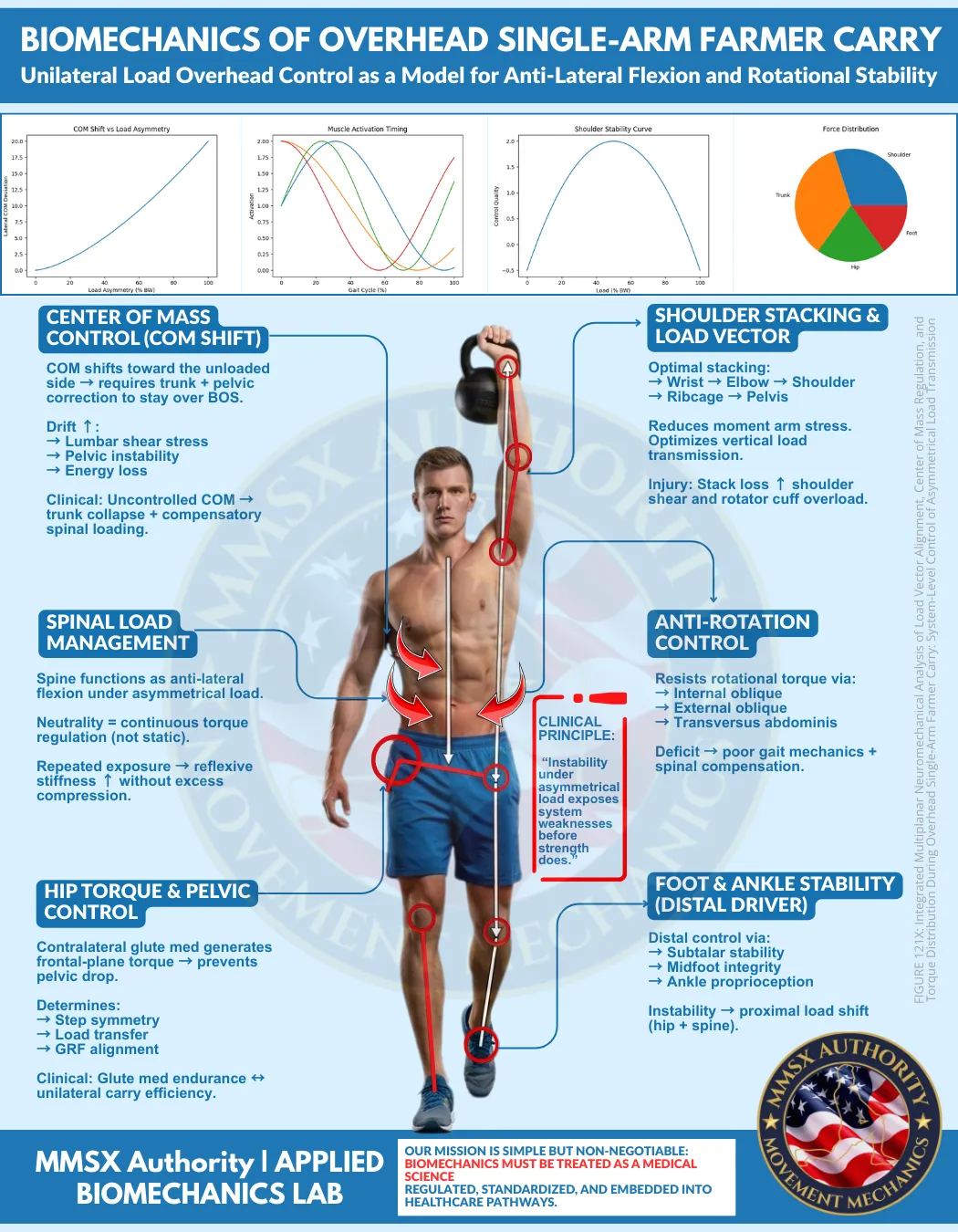

Muscle synergies are crucial to comprehend and need specific physical training because their organization permits the nervous system to deliver consistent biomechanical functions that are shared throughout motor activities.
“Instead of viewing muscles in isolation, we now identify more integrated movement patterns that demonstrate how we truly make movement,” says Dr. Neeraj Mehta.”
Now we as Professionals feel that more functionally focused motions will increase inter-muscular coordination, which is how muscles work together to make a movement. This will lead to improved improvement in all over fitness.
Sling ideas and multi-joint, multi-intensity movement evaluation may co-exist happily. The complete system has to be assessed in order to identify any weaknesses and possible replacement solutions. Sling training might be considered a complete overhaul of the sports squad rather than a simple substitution of an exhausted, injured or otherwise inefficient player. We must take into account the individual’s synergistic tactics and their influence on risk of performance, injury incidence, and general quality of life.
In this article, I’ll go over why the DLS subsystem is so crucial to improving one’s health and well-being. (This is just the first part of the article, and the other three subsystems will be published in the near future).
The deep longitudinal subsystem (DLS)
DLS is a set of muscles from the feet to the back that assist in balancing the body, particularly during activities such as walking.
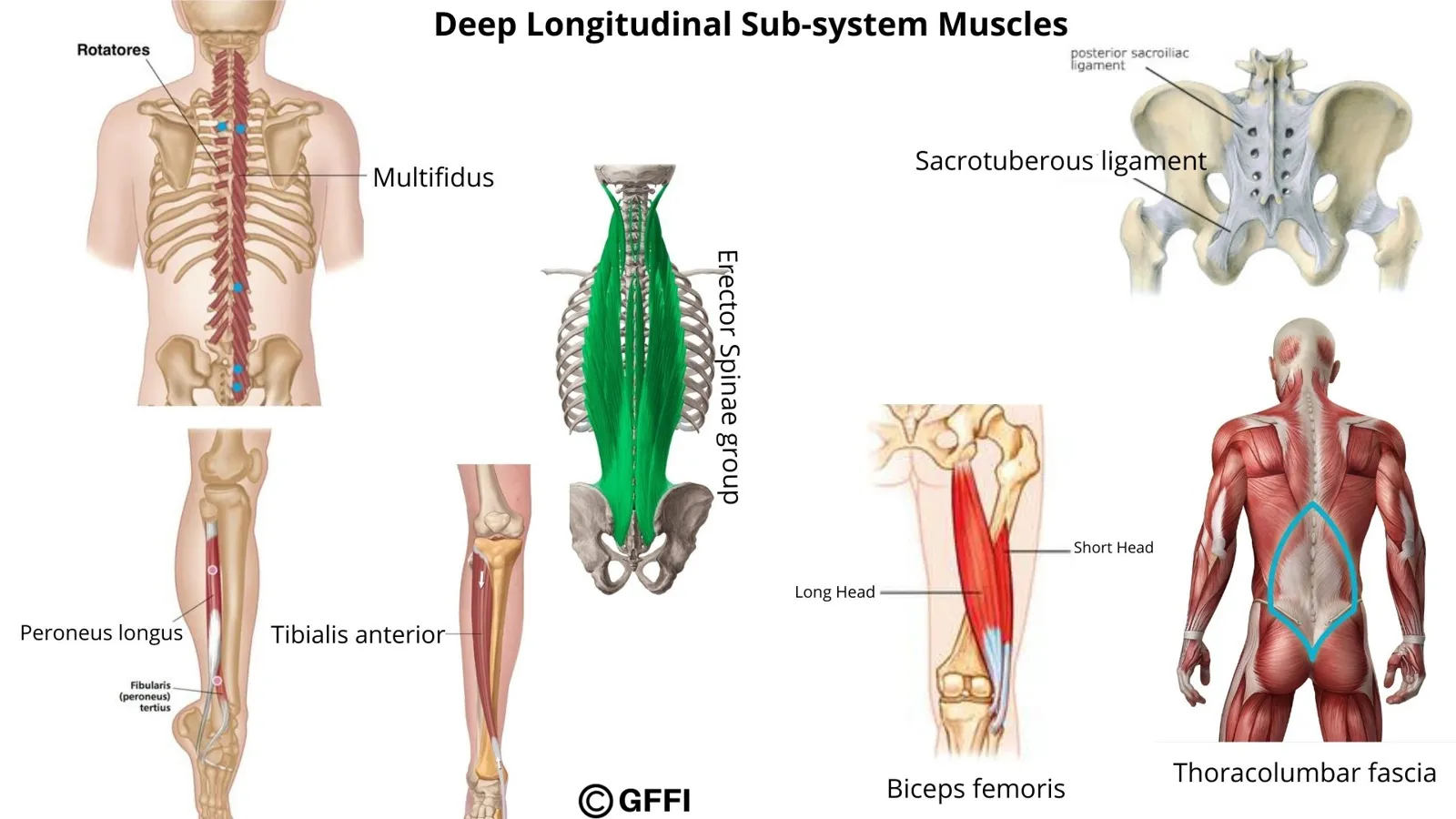
The DLS is made up of the following components:
Tibialis anterior
Peroneus longus
Biceps femoris (one of the three hamstring muscles)
Sacrotuberous ligament
Thoracolumbar fascia
Erector Spinae group
Multifidi
What happens to our bodies when our feet hit the ground?
Direct longitudinal force transmission from the ankle and foot to the trunk is provided by this mechanism. To manage ground response forces during gait movements, the deep longitudinal subsystem plays the most important function.
The erector spinae, thoracolumbar fascia, sacrotuberous ligament, and biceps femoris make up the deep longitudinal subsystem. A large part of the body’s structural stability is provided by the deep longitudinal subsystem. As a matter of fact, it offers longitudinal force transfer from the foot and ankle to the trunk and back down again.
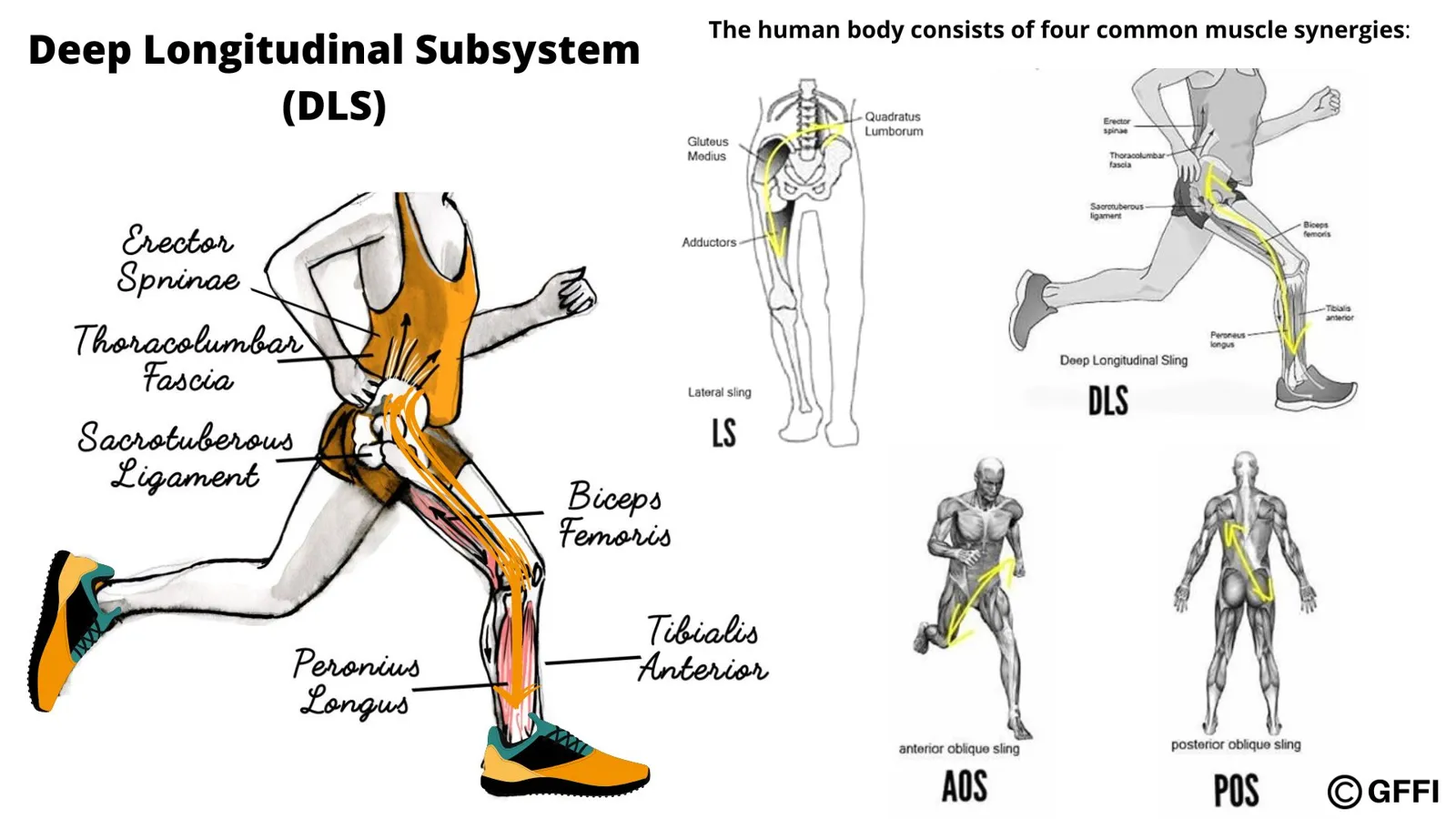
The Deep Longitudinal Subsystem is one of four muscle synergies that the body employs during physical activity. The deep longitudinal system is one of the ways we can look at back health and how to save our overall mechanics:
- The deep longitudinal subsystem is primarily responsible for regulating ground response forces during walking.
- Longitudinal stabilization is aided by a well-developed longitudinal subsystem.
- Direct longitudinal force transmission from the ankle and foot to the trunk is provided by this mechanism.
- Gait movements are controlled by the deep longitudinal subsystem’s primary function.
- An array of muscle groups, membranes, and ligamentous structures are involved in its movement down the back as well as down the legs.
- Rotational activities generate transverse plane forces that are distributed via the posterior oblique subsystem and the deep longitudinal subsystem.
- An array of muscle groups, membranes, and ligamentous structures are involved in its movement down the back as well as down the legs.
The Deep Longitudinal Subsystem works alongside three other muscle synergies:
The Lateral Subsystem
The Posterior Oblique Subsystem
The Anterior Oblique Subsystem
1. Anterior Oblique System: External and internal oblique with the opposing leg’s adductors and intervening anterior abdominal fascia.
2. Posterior Oblique System: The lat dorsi and opposing glute maximus.
3. Deep Longitudinal System: Erectors, the innervating fascia and biceps femoris.
4. Lateral System: Glute medius and minimus and the opposing adductors of the thigh
(Vleeming et al., 1995; Lee, 1999)
Each of these systems has a role to play and should be understood by personal trainers and other fitness professionals working in the field.
LONGITUDINAL SUBSYSTEM ORIGIN AND INSERTION
The Deep Longitudinal Subsystem has several places of origin and insertion as a main muscle synergy.
The erector spinae, located on the top of the spine, is made up of the illiocostalis, longissimus, and spinalis muscles. There are many sites where they originate and insert between the skull base and the transverse processes of the cervical spine.
Some of the system’s other muscles are located in the back, hips, and legs.
Of order to walk, jog, and run, you need to use the muscles and ligaments in the Deep Longitudinal Subsystem group. Other contralateral actions that separate the left and right sides of the body from back to front may also be performed with the aid of your hip flexor muscles, which help you bend forward, squat and lunge.
The sacroiliac joint (SIJ), located between the sacrum and the pelvis, is stabilized in part by the Deep Longitudinal Subsystem. Support in this region is essential to prevent back discomfort. It also stabilizes the whole back, core, and hips.
The phrase “deep longitudinal sling” is used rather often, but what precisely does that word refer to?
A sling that has a depth along the longitudinal axis (DLS) Anatomically speaking, the erector spinae, multifidus, thoracolumbar fascia, sacrotuberous ligament, and the biceps femoris are all connected to one another through the deep lateral sling. This sling permits movement in the sagittal plane while simultaneously having an effect on the local stability.
CONCERNS WITH THE DEEP LONGITUDINAL SUBSYSTEM
With so much of the body covered, the Deep Longitudinal Subsystem may generate a slew of different difficulties. Joint discomfort and limited mobility in the neck, back, hips, and legs, as well as a loss of core stability, are all possible side effects.
This system is critical in supporting and facilitating mobility of the spine for the many individuals who suffer from back pain. Those who spend a lot of time sitting at a computer may have issues when they utilize their legs during sports or at the gym, especially while squatting or deadlifting. Use a foam roller before and after exercising to help alleviate this discomfort.
Strengthening the Deep Longitudinal Subsystem Through Exercise
DEEP LONGITUDINAL SUBSYSTEM EXERCISES
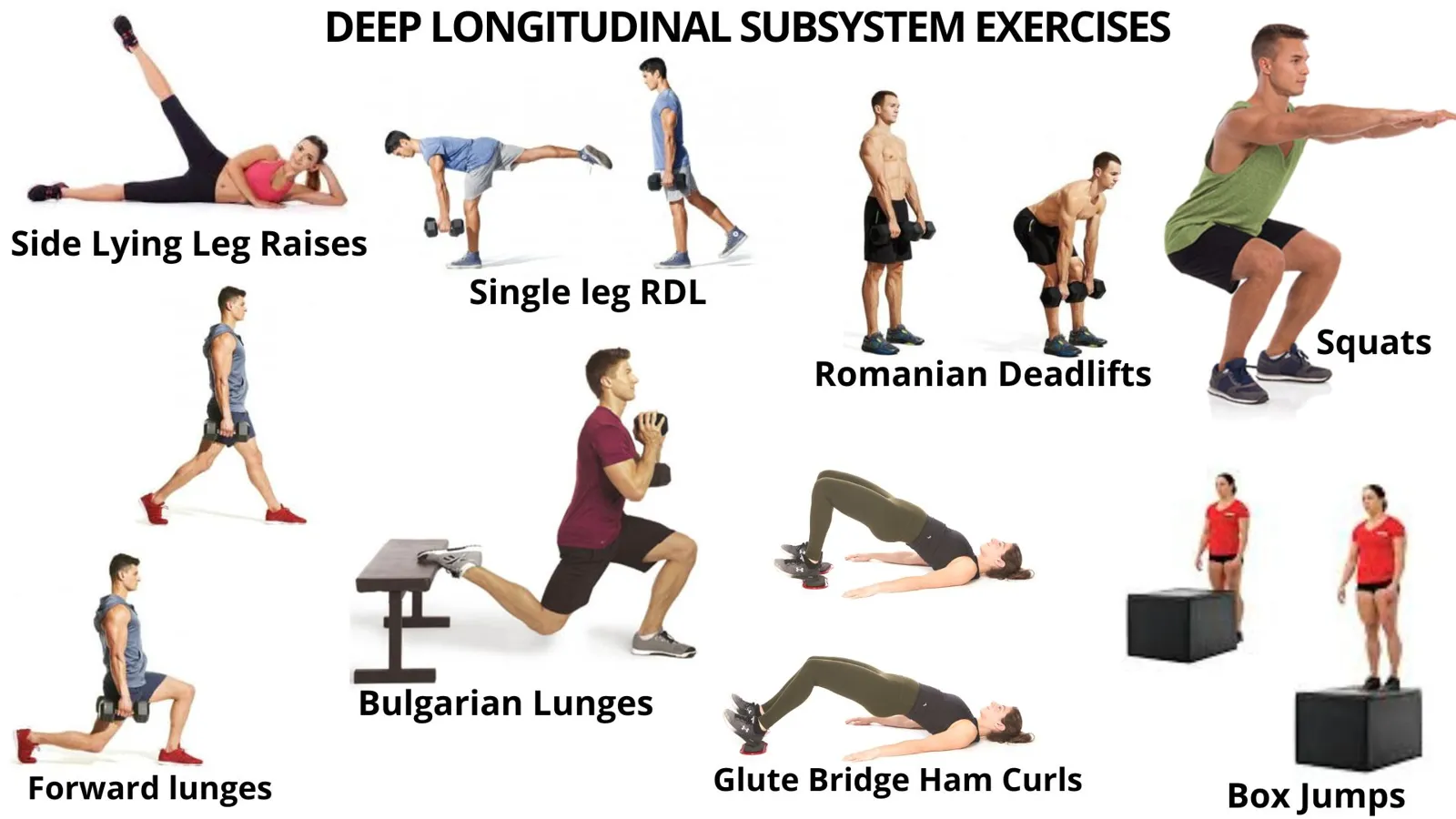
Controlling ground response forces during gait movements is an important function of the deep longitudinal system. The deep longitudinal subsystem would thus benefit from activities that mirror this movement pattern. A full body exercise can bolster the deep longitudinal subsystem muscle group. Some are as follows:
Squats
Romanian Deadlifts
Forward lunges
Box Steps/Jumps
Bulgarian Lunges
Side Lying Leg Raises
Single leg RDL
Glute Bridge Ham Curls
It’s also a good idea to do some simple, static stretches for your back, hip flexors, and hamstrings.
Other problems associated with the Deep Longitudinal Subsystem
While walking and running, this system performs a crucial function in stabilizing the SI joint and limiting the amount of healthy pelvic rotation that must occur with each stride. With our right heel striking, the sacrotuberous ligament stabilizes our right SIJ through the right bicep femoris muscle, which is one of three hamstring muscles. This muscle regulates stresses between the lower leg and pelvis. Once these pressures have been transferred to the thoracolumbar fascia and spinal erector muscles, they govern the rotation of the torso and aid in continuing propulsion as one walks or runs. If this DLS isn’t operating properly, the right SI joint and lower back area is compressed when the foot meets the ground, resulting in pain and discomfort. Inadequate hamstring strength, which is frequent in hamstring strain injuries and lateral ankle sprains, is typically to blame for this occurrence.
Reference:
Liebenson, Craig. “The relationship of the sacroiliac joint, stabilization musculature, and lumbo-pelvic instability.” Journal of bodywork and movement therapies1 (2004): 43-45.
Brolinson, P. Gunnar, Albert J. Kozar, and Greg Cibor. “Sacroiliac joint dysfunction in athletes.” Current Sports Medicine Reports1 (2003): 47-56.Bergmark A. Stability of the lumbar spine. A study in mechanical engineering. Acta Orthop Scand Suppl. 1989;230:1-54.
Clark MA. Lucett SC. Sutton, BG. NASM Essentials of Corrective Exercise Training 1st Edition Revised. Burlington, MA: Jones and Bartlett Learning; 2014.
https://www.fluidhealthandfitness.com/blogs/biomechanics/biomechanical-monthly-muscular-systems-and-anatomical-slings
https://inspirehealthservices.com.au/blogs/inspired-insights/myofascial-slings
https://www.ncbi.nlm.nih.gov/pmc/articles/PMC4563321/
https://www.comeramovementscience.co.uk/post/slings-and-things
https://www.art-of-motion.com/en/shop/slings-essentials-manual-embodiment-video-library
मांसपेशी सहक्रियाओं (muscle synergies) को समझना अत्यंत महत्वपूर्ण है और इनके लिए विशिष्ट शारीरिक प्रशिक्षण आवश्यक है, क्योंकि इनका संगठन तंत्रिका तंत्र को ऐसे सुसंगत बायोमैकेनिकल कार्य प्रदान करने में सक्षम बनाता है जो सभी मोटर गतिविधियों में साझा होते हैं।
“मांसपेशियों को पृथक रूप से देखने के स्थान पर, अब हम अधिक एकीकृत गति-पैटर्नों की पहचान करते हैं जो यह दर्शाते हैं कि हम वास्तव में गति कैसे उत्पन्न करते हैं,” डॉ. नीरज मेहता, PhD कहते हैं।”
अब हम पेशेवरों का मानना है कि अधिक कार्यात्मक रूप से केंद्रित गतियाँ अंतर-मांसपेशीय समन्वय (inter-muscular coordination) को बढ़ाएँगी, अर्थात् वह प्रक्रिया जिसमें मांसपेशियाँ मिलकर एक गति उत्पन्न करती हैं। इससे समग्र फिटनेस में और अधिक सुधार होगा।
स्लिंग (sling) अवधारणाएँ और बहु-संधि, बहु-तीव्रता वाली गति का मूल्यांकन सहज रूप से सह-अस्तित्व में रह सकते हैं। किसी भी दुर्बलता और संभावित प्रतिस्थापन समाधानों की पहचान के लिए संपूर्ण तंत्र का मूल्यांकन आवश्यक है। स्लिंग प्रशिक्षण को किसी थके हुए, चोटिल या अन्यथा अक्षम खिलाड़ी के साधारण प्रतिस्थापन के स्थान पर खेल-दल के संपूर्ण पुनर्गठन के रूप में देखा जा सकता है। हमें व्यक्ति की सहक्रियात्मक रणनीतियों तथा प्रदर्शन-जोखिम, चोट की घटनाओं और जीवन की सामान्य गुणवत्ता पर उनके प्रभाव को ध्यान में रखना चाहिए।
इस लेख में मैं यह स्पष्ट करूँगा कि किसी व्यक्ति के स्वास्थ्य और कल्याण में सुधार के लिए DLS उपतंत्र इतना महत्वपूर्ण क्यों है। (यह लेख का केवल पहला भाग है, और शेष तीन उपतंत्र निकट भविष्य में प्रकाशित किए जाएँगे)।
गहन अनुदैर्ध्य उपतंत्र (The deep longitudinal subsystem — DLS)
DLS पैरों से पीठ तक की मांसपेशियों का एक समूह है जो विशेष रूप से चलने जैसी गतिविधियों के दौरान शरीर को संतुलित रखने में सहायता करता है।
DLS निम्नलिखित घटकों से मिलकर बना है:
टिबियालिस एंटीरियर (Tibialis anterior)
पेरोनियस लॉन्गस (Peroneus longus)
बाइसेप्स फ़ेमोरिस (Biceps femoris) (तीन हैमस्ट्रिंग मांसपेशियों में से एक)
सैक्रोट्यूबरस लिगामेंट (Sacrotuberous ligament)
थोरैकोलम्बर फ़ेशिया (Thoracolumbar fascia)
इरेक्टर स्पाइनी समूह (Erector Spinae group)
मल्टीफ़िडी (Multifidi)
जब हमारे पैर भूमि से टकराते हैं, तब हमारे शरीर में क्या होता है?
यह तंत्र टखने और पैर से धड़ तक प्रत्यक्ष अनुदैर्ध्य बल-संचरण (longitudinal force transmission) प्रदान करता है। चाल (gait) की गतियों के दौरान भू-प्रतिक्रिया बलों (ground response forces) को नियंत्रित करने में गहन अनुदैर्ध्य उपतंत्र सबसे महत्वपूर्ण भूमिका निभाता है।
इरेक्टर स्पाइनी, थोरैकोलम्बर फ़ेशिया, सैक्रोट्यूबरस लिगामेंट और बाइसेप्स फ़ेमोरिस मिलकर गहन अनुदैर्ध्य उपतंत्र बनाते हैं। शरीर की संरचनात्मक स्थिरता का एक बड़ा भाग गहन अनुदैर्ध्य उपतंत्र द्वारा प्रदान किया जाता है। वास्तव में, यह पैर और टखने से धड़ तक और पुनः नीचे की ओर अनुदैर्ध्य बल-स्थानांतरण प्रदान करता है।
गहन अनुदैर्ध्य उपतंत्र उन चार मांसपेशी सहक्रियाओं में से एक है जिनका उपयोग शरीर शारीरिक गतिविधि के दौरान करता है। गहन अनुदैर्ध्य तंत्र उन दृष्टिकोणों में से एक है जिनके माध्यम से हम पीठ के स्वास्थ्य को और अपनी समग्र यांत्रिकी को सुरक्षित रखने के उपायों को देख सकते हैं:
- चलने के दौरान भू-प्रतिक्रिया बलों के नियमन के लिए मुख्य रूप से गहन अनुदैर्ध्य उपतंत्र उत्तरदायी है।
- भली-भाँति विकसित अनुदैर्ध्य उपतंत्र अनुदैर्ध्य स्थिरीकरण में सहायक होता है।
- यह तंत्र टखने और पैर से धड़ तक प्रत्यक्ष अनुदैर्ध्य बल-संचरण प्रदान करता है।
- चाल की गतियाँ गहन अनुदैर्ध्य उपतंत्र के प्राथमिक कार्य द्वारा नियंत्रित होती हैं।
- पीठ से नीचे तथा पैरों से नीचे की ओर इसकी गति में अनेक मांसपेशी समूह, झिल्लियाँ और लिगामेंटस संरचनाएँ सम्मिलित होती हैं।
- घूर्णी गतिविधियाँ अनुप्रस्थ तल (transverse plane) के बल उत्पन्न करती हैं, जो पश्च तिर्यक उपतंत्र (posterior oblique subsystem) और गहन अनुदैर्ध्य उपतंत्र के माध्यम से वितरित होते हैं।
- पीठ से नीचे तथा पैरों से नीचे की ओर इसकी गति में अनेक मांसपेशी समूह, झिल्लियाँ और लिगामेंटस संरचनाएँ सम्मिलित होती हैं।
गहन अनुदैर्ध्य उपतंत्र तीन अन्य मांसपेशी सहक्रियाओं के साथ कार्य करता है:
पार्श्व उपतंत्र (The Lateral Subsystem)
पश्च तिर्यक उपतंत्र (The Posterior Oblique Subsystem)
अग्र तिर्यक उपतंत्र (The Anterior Oblique Subsystem)
1. अग्र तिर्यक तंत्र (Anterior Oblique System): बाह्य और आंतरिक ऑब्लिक, विपरीत पैर के एडक्टर्स तथा उनके बीच स्थित अग्र उदरीय फ़ेशिया।
2. पश्च तिर्यक तंत्र (Posterior Oblique System): लैटिसिमस डॉर्सी (lat dorsi) और विपरीत ग्लूटियस मैक्सिमस।
3. गहन अनुदैर्ध्य तंत्र (Deep Longitudinal System): इरेक्टर्स, संबद्ध फ़ेशिया और बाइसेप्स फ़ेमोरिस।
4. पार्श्व तंत्र (Lateral System): ग्लूटियस मीडियस और मिनिमस तथा जाँघ के विपरीत एडक्टर्स
(Vleeming et al., 1995; Lee, 1999)
इनमें से प्रत्येक तंत्र की अपनी भूमिका है, और इस क्षेत्र में कार्यरत पर्सनल ट्रेनरों तथा अन्य फिटनेस पेशेवरों को इन्हें समझना चाहिए।
अनुदैर्ध्य उपतंत्र का उद्गम और निवेशन (ORIGIN AND INSERTION)
एक प्रमुख मांसपेशी सहक्रिया के रूप में गहन अनुदैर्ध्य उपतंत्र के अनेक उद्गम और निवेशन स्थल हैं।
रीढ़ के ऊपर स्थित इरेक्टर स्पाइनी, इलियोकोस्टैलिस (illiocostalis), लॉन्गिसिमस (longissimus) और स्पाइनैलिस (spinalis) मांसपेशियों से मिलकर बनी है। खोपड़ी के आधार और ग्रीवा रीढ़ (cervical spine) की अनुप्रस्थ प्रवर्धों (transverse processes) के बीच इनके अनेक उद्गम और निवेशन स्थल हैं।
इस तंत्र की कुछ अन्य मांसपेशियाँ पीठ, कूल्हों और पैरों में स्थित हैं।
चलने, जॉगिंग करने और दौड़ने के लिए आपको गहन अनुदैर्ध्य उपतंत्र समूह की मांसपेशियों और लिगामेंट्स का उपयोग करना पड़ता है। अन्य विपरीत-पार्श्वीय (contralateral) क्रियाएँ, जो शरीर के बाएँ और दाएँ भागों को पीछे से आगे तक पृथक करती हैं, भी आपकी हिप फ्लेक्सर मांसपेशियों की सहायता से की जा सकती हैं, जो आगे झुकने, स्क्वाट करने और लंज करने में सहायता करती हैं।
सैक्रम और श्रोणि के बीच स्थित सैक्रोइलियक जोड़ (sacroiliac joint — SIJ) आंशिक रूप से गहन अनुदैर्ध्य उपतंत्र द्वारा स्थिर किया जाता है। पीठ की असुविधा से बचने के लिए इस क्षेत्र में आधार अत्यावश्यक है। यह संपूर्ण पीठ, कोर और कूल्हों को भी स्थिर करता है।
“गहन अनुदैर्ध्य स्लिंग” (deep longitudinal sling) वाक्यांश का प्रयोग प्रायः किया जाता है, किंतु यह शब्द ठीक-ठीक किसे संदर्भित करता है?
एक ऐसा स्लिंग जिसकी अनुदैर्ध्य अक्ष के साथ गहराई होती है (DLS)। शारीरिक रचना की दृष्टि से, इरेक्टर स्पाइनी, मल्टीफ़िडस, थोरैकोलम्बर फ़ेशिया, सैक्रोट्यूबरस लिगामेंट और बाइसेप्स फ़ेमोरिस — ये सभी गहन पार्श्व स्लिंग के माध्यम से एक-दूसरे से जुड़े हुए हैं। यह स्लिंग सैजिटल तल (sagittal plane) में गति की अनुमति देता है, साथ ही स्थानीय स्थिरता पर भी प्रभाव डालता है।
गहन अनुदैर्ध्य उपतंत्र से संबंधित चिंताएँ
शरीर के इतने बड़े भाग को आच्छादित करने के कारण, गहन अनुदैर्ध्य उपतंत्र अनेक प्रकार की कठिनाइयाँ उत्पन्न कर सकता है। गर्दन, पीठ, कूल्हों और पैरों में जोड़ों की असुविधा और सीमित गतिशीलता, साथ ही कोर स्थिरता की हानि — ये सभी संभावित दुष्प्रभाव हैं।
पीठ दर्द से पीड़ित अनेक व्यक्तियों के लिए रीढ़ की गतिशीलता को आधार देने और सुगम बनाने में यह तंत्र अत्यंत महत्वपूर्ण है। जो लोग कंप्यूटर के सामने बैठकर अधिक समय बिताते हैं, उन्हें खेल के दौरान या जिम में, विशेषकर स्क्वाट या डेडलिफ्ट करते समय, अपने पैरों का उपयोग करने में समस्याएँ हो सकती हैं। इस असुविधा को कम करने के लिए व्यायाम से पहले और बाद में फोम रोलर का उपयोग करें।
व्यायाम के माध्यम से गहन अनुदैर्ध्य उपतंत्र का सुदृढ़ीकरण
गहन अनुदैर्ध्य उपतंत्र के व्यायाम
चाल की गतियों के दौरान भू-प्रतिक्रिया बलों को नियंत्रित करना गहन अनुदैर्ध्य तंत्र का एक महत्वपूर्ण कार्य है। अतः इस गति-पैटर्न का अनुकरण करने वाली गतिविधियाँ गहन अनुदैर्ध्य उपतंत्र के लिए लाभकारी होंगी। संपूर्ण शरीर का व्यायाम गहन अनुदैर्ध्य उपतंत्र के मांसपेशी समूह को सुदृढ़ कर सकता है। कुछ व्यायाम इस प्रकार हैं:
स्क्वाट (Squats)
रोमानियन डेडलिफ्ट (Romanian Deadlifts)
फ़ॉरवर्ड लंज (Forward lunges)
बॉक्स स्टेप्स/जंप्स (Box Steps/Jumps)
बल्गेरियन लंज (Bulgarian Lunges)
साइड लाइंग लेग रेज़ (Side Lying Leg Raises)
सिंगल लेग RDL (Single leg RDL)
ग्लूट ब्रिज हैम कर्ल (Glute Bridge Ham Curls)
अपनी पीठ, हिप फ्लेक्सर्स और हैमस्ट्रिंग के लिए कुछ सरल, स्थैतिक (static) स्ट्रेच करना भी उचित है।
गहन अनुदैर्ध्य उपतंत्र से संबंधित अन्य समस्याएँ
चलते और दौड़ते समय यह तंत्र SI जोड़ को स्थिर करने तथा प्रत्येक कदम के साथ होने वाले स्वस्थ श्रोणि घूर्णन की मात्रा को सीमित करने में महत्वपूर्ण कार्य करता है। जब हमारी दाईं एड़ी भूमि पर पड़ती है, तो सैक्रोट्यूबरस लिगामेंट दाईं बाइसेप फ़ेमोरिस मांसपेशी — जो तीन हैमस्ट्रिंग मांसपेशियों में से एक है — के माध्यम से हमारे दाएँ SIJ को स्थिर करता है। यह मांसपेशी निचले पैर और श्रोणि के बीच के तनावों का नियमन करती है। जब ये दबाव थोरैकोलम्बर फ़ेशिया और स्पाइनल इरेक्टर मांसपेशियों तक स्थानांतरित हो जाते हैं, तो वे धड़ के घूर्णन को नियंत्रित करते हैं और चलते या दौड़ते समय निरंतर प्रणोदन में सहायता करते हैं। यदि यह DLS उचित रूप से कार्य नहीं कर रहा है, तो पैर के भूमि से मिलने पर दायाँ SI जोड़ और कमर का निचला भाग संपीड़ित हो जाता है, जिसके परिणामस्वरूप दर्द और असुविधा होती है। हैमस्ट्रिंग की अपर्याप्त शक्ति, जो हैमस्ट्रिंग स्ट्रेन चोटों और पार्श्व टखने की मोच (lateral ankle sprains) में सामान्य है, सामान्यतः इस स्थिति के लिए उत्तरदायी होती है।
संदर्भ:
Liebenson, Craig. “The relationship of the sacroiliac joint, stabilization musculature, and lumbo-pelvic instability.” Journal of bodywork and movement therapies1 (2004): 43-45.
Brolinson, P. Gunnar, Albert J. Kozar, and Greg Cibor. “Sacroiliac joint dysfunction in athletes.” Current Sports Medicine Reports1 (2003): 47-56.Bergmark A. Stability of the lumbar spine. A study in mechanical engineering. Acta Orthop Scand Suppl. 1989;230:1-54.
Clark MA. Lucett SC. Sutton, BG. NASM Essentials of Corrective Exercise Training 1st Edition Revised. Burlington, MA: Jones and Bartlett Learning; 2014.
https://www.fluidhealthandfitness.com/blogs/biomechanics/biomechanical-monthly-muscular-systems-and-anatomical-slings
https://inspirehealthservices.com.au/blogs/inspired-insights/myofascial-slings
https://www.ncbi.nlm.nih.gov/pmc/articles/PMC4563321/
https://www.comeramovementscience.co.uk/post/slings-and-things
https://www.art-of-motion.com/en/shop/slings-essentials-manual-embodiment-video-library
Es fundamental comprender las sinergias musculares, que requieren un entrenamiento físico específico, porque su organización permite al sistema nervioso producir funciones biomecánicas consistentes que se comparten a lo largo de distintas actividades motoras.
“En lugar de considerar los músculos de forma aislada, ahora identificamos patrones de movimiento más integrados que demuestran cómo generamos realmente el movimiento”, afirma el Dr. Neeraj Mehta, PhD.
Hoy, como profesionales, consideramos que los movimientos con un enfoque más funcional aumentarán la coordinación intermuscular, es decir, la forma en que los músculos trabajan conjuntamente para producir un movimiento. Esto se traducirá en una mayor mejora de la condición física global.
Los conceptos de cadenas miofasciales (slings) y la evaluación del movimiento multiarticular y de intensidad variable pueden coexistir sin dificultad. Es necesario evaluar el sistema completo para identificar cualquier debilidad y las posibles soluciones de sustitución. El entrenamiento de las cadenas miofasciales podría entenderse como una reestructuración completa del equipo deportivo, más que como la simple sustitución de un jugador agotado, lesionado o ineficiente por cualquier otro motivo. Debemos tener en cuenta las estrategias sinérgicas del individuo y su influencia sobre el rendimiento, la incidencia de lesiones y la calidad de vida en general.
En este artículo explicaré por qué el subsistema DLS es tan determinante para mejorar la salud y el bienestar. (Esta es solo la primera parte del artículo; los otros tres subsistemas se publicarán próximamente).
El subsistema longitudinal profundo (deep longitudinal subsystem, DLS)
El DLS es un conjunto de músculos que se extiende desde los pies hasta la espalda y que contribuye al equilibrio del cuerpo, en particular durante actividades como la marcha.
El DLS está formado por los siguientes componentes:
Tibial anterior
Peroneo largo
Bíceps femoral (uno de los tres músculos isquiotibiales)
Ligamento sacrotuberoso
Fascia toracolumbar
Grupo de los erectores de la columna
Multífidos
¿Qué ocurre en nuestro cuerpo cuando los pies contactan con el suelo?
Este mecanismo proporciona una transmisión directa de fuerza longitudinal desde el tobillo y el pie hasta el tronco. El subsistema longitudinal profundo desempeña la función más importante en la gestión de las fuerzas de reacción del suelo durante los movimientos de la marcha.
El subsistema longitudinal profundo está formado por los erectores de la columna, la fascia toracolumbar, el ligamento sacrotuberoso y el bíceps femoral. El subsistema longitudinal profundo aporta gran parte de la estabilidad estructural del cuerpo. De hecho, ofrece una transferencia longitudinal de fuerza desde el pie y el tobillo hasta el tronco, y de nuevo en sentido descendente.
El subsistema longitudinal profundo es una de las cuatro sinergias musculares que el cuerpo emplea durante la actividad física. El sistema longitudinal profundo es una de las perspectivas desde las que podemos analizar la salud de la espalda y la manera de preservar nuestra mecánica global:
- El subsistema longitudinal profundo es el principal responsable de regular las fuerzas de reacción del suelo durante la marcha.
- Un subsistema longitudinal bien desarrollado favorece la estabilización longitudinal.
- Este mecanismo proporciona una transmisión directa de fuerza longitudinal desde el tobillo y el pie hasta el tronco.
- La función principal del subsistema longitudinal profundo es el control de los movimientos de la marcha.
- En su recorrido descendente por la espalda y por las piernas intervienen diversos grupos musculares, membranas y estructuras ligamentosas.
- Las actividades de rotación generan fuerzas en el plano transversal que se distribuyen a través del subsistema oblicuo posterior y del subsistema longitudinal profundo.
- En su recorrido descendente por la espalda y por las piernas intervienen diversos grupos musculares, membranas y estructuras ligamentosas.
El subsistema longitudinal profundo actúa conjuntamente con otras tres sinergias musculares:
El subsistema lateral
El subsistema oblicuo posterior
El subsistema oblicuo anterior
1. Sistema oblicuo anterior: oblicuos externo e interno junto con los aductores de la pierna contralateral y la fascia abdominal anterior intermedia.
2. Sistema oblicuo posterior: el dorsal ancho y el glúteo mayor contralateral.
3. Sistema longitudinal profundo: los erectores, la fascia asociada y el bíceps femoral.
4. Sistema lateral: glúteos medio y menor y los aductores contralaterales del muslo
(Vleeming et al., 1995; Lee, 1999)
Cada uno de estos sistemas cumple una función que deben comprender los entrenadores personales y demás profesionales del fitness que trabajan en este ámbito.
ORIGEN E INSERCIÓN DEL SUBSISTEMA LONGITUDINAL
Como sinergia muscular principal, el subsistema longitudinal profundo presenta diversos puntos de origen e inserción.
Los erectores de la columna, situados a lo largo de la columna vertebral, están formados por los músculos iliocostal, longísimo y espinoso. Presentan numerosos puntos de origen e inserción entre la base del cráneo y las apófisis transversas de la columna cervical.
Otros músculos del sistema se localizan en la espalda, las caderas y las piernas.
Para caminar, trotar y correr es necesario utilizar los músculos y ligamentos del grupo del subsistema longitudinal profundo. Otras acciones contralaterales que diferencian los lados izquierdo y derecho del cuerpo, de atrás hacia delante, también pueden realizarse con la ayuda de los músculos flexores de la cadera, que le permiten inclinarse hacia delante, realizar sentadillas y zancadas.
La articulación sacroilíaca (ASI, SIJ), situada entre el sacro y la pelvis, se estabiliza en parte gracias al subsistema longitudinal profundo. El soporte en esta región es esencial para prevenir las molestias de espalda. También estabiliza la totalidad de la espalda, el core y las caderas.
La expresión “cadena longitudinal profunda (deep longitudinal sling)” se utiliza con bastante frecuencia, pero ¿a qué se refiere exactamente?
Se trata de una cadena con profundidad a lo largo del eje longitudinal (DLS). Desde el punto de vista anatómico, los erectores de la columna, el multífido, la fascia toracolumbar, el ligamento sacrotuberoso y el bíceps femoral están conectados entre sí a través de la cadena lateral profunda. Esta cadena permite el movimiento en el plano sagital y, al mismo tiempo, influye en la estabilidad local.
PROBLEMAS RELACIONADOS CON EL SUBSISTEMA LONGITUDINAL PROFUNDO
Dada la gran extensión corporal que abarca, el subsistema longitudinal profundo puede originar numerosas dificultades distintas. Entre los posibles efectos se encuentran las molestias articulares y la movilidad limitada en el cuello, la espalda, las caderas y las piernas, así como la pérdida de estabilidad del core.
Para las numerosas personas que padecen dolor de espalda, este sistema resulta crítico para sostener y facilitar la movilidad de la columna. Quienes pasan mucho tiempo sentados frente a un ordenador pueden presentar problemas al utilizar las piernas en la práctica deportiva o en el gimnasio, en especial al realizar sentadillas o peso muerto. Utilice un rodillo de espuma (foam roller) antes y después del ejercicio para ayudar a aliviar estas molestias.
Fortalecimiento del subsistema longitudinal profundo mediante el ejercicio
EJERCICIOS PARA EL SUBSISTEMA LONGITUDINAL PROFUNDO
El control de las fuerzas de reacción del suelo durante los movimientos de la marcha es una función importante del sistema longitudinal profundo. Por consiguiente, el subsistema longitudinal profundo se beneficiaría de actividades que reproduzcan este patrón de movimiento. Un ejercicio de cuerpo completo puede reforzar el grupo muscular del subsistema longitudinal profundo. Algunos de ellos son los siguientes:
Sentadillas
Peso muerto rumano
Zancadas hacia delante
Subidas/saltos al cajón
Zancadas búlgaras
Elevaciones de pierna en decúbito lateral
Peso muerto rumano a una pierna (single leg RDL)
Puente de glúteos con curl femoral
También es recomendable realizar algunos estiramientos estáticos sencillos para la espalda, los flexores de la cadera y los isquiotibiales.
Otros problemas asociados al subsistema longitudinal profundo
Durante la marcha y la carrera, este sistema desempeña una función crucial en la estabilización de la articulación SI y en la limitación de la cantidad de rotación pélvica saludable que debe producirse en cada zancada. Cuando el talón derecho contacta con el suelo, el ligamento sacrotuberoso estabiliza nuestra ASI derecha a través del músculo bíceps femoral derecho, uno de los tres músculos isquiotibiales. Este músculo regula las tensiones entre la pierna y la pelvis. Una vez que estas presiones se han transferido a la fascia toracolumbar y a los músculos erectores de la columna, gobiernan la rotación del tronco y contribuyen a mantener la propulsión al caminar o correr. Si este DLS no funciona correctamente, la articulación SI derecha y la región lumbar se comprimen cuando el pie contacta con el suelo, lo que provoca dolor y molestias. Una fuerza insuficiente de los isquiotibiales, frecuente en las lesiones por distensión de los isquiotibiales y en los esguinces laterales de tobillo, suele ser la causa de este fenómeno.
Referencias:
Liebenson, Craig. “The relationship of the sacroiliac joint, stabilization musculature, and lumbo-pelvic instability.” Journal of bodywork and movement therapies1 (2004): 43-45.
Brolinson, P. Gunnar, Albert J. Kozar, and Greg Cibor. “Sacroiliac joint dysfunction in athletes.” Current Sports Medicine Reports1 (2003): 47-56.Bergmark A. Stability of the lumbar spine. A study in mechanical engineering. Acta Orthop Scand Suppl. 1989;230:1-54.
Clark MA. Lucett SC. Sutton, BG. NASM Essentials of Corrective Exercise Training 1st Edition Revised. Burlington, MA: Jones and Bartlett Learning; 2014.
https://www.fluidhealthandfitness.com/blogs/biomechanics/biomechanical-monthly-muscular-systems-and-anatomical-slings
https://inspirehealthservices.com.au/blogs/inspired-insights/myofascial-slings
https://www.ncbi.nlm.nih.gov/pmc/articles/PMC4563321/
https://www.comeramovementscience.co.uk/post/slings-and-things
https://www.art-of-motion.com/en/shop/slings-essentials-manual-embodiment-video-library
يُعدّ فهم التآزرات العضلية (muscle synergies) أمرًا بالغ الأهمية، وهي تحتاج إلى تدريب بدني مخصص، لأن تنظيمها يتيح للجهاز العصبي أداء وظائف ميكانيكية حيوية ثابتة مشتركة بين الأنشطة الحركية.
“بدلًا من النظر إلى العضلات بمعزل عن بعضها، صرنا نحدّد أنماطًا حركية أكثر تكاملًا تُبيّن كيف نُنتج الحركة فعليًا”، كما يقول د. نيراج ميهتا، PhD.”
ونحن بوصفنا مهنيين نرى الآن أن الحركات ذات التركيز الوظيفي الأكبر ستُعزّز التناسق بين العضلات (inter-muscular coordination)، أي الكيفية التي تعمل بها العضلات معًا لإنتاج حركة ما. وسيؤدي ذلك إلى تحسّن أكبر في اللياقة البدنية الشاملة.
يمكن لمفاهيم الأحزمة العضلية (slings) وتقييم الحركة متعددة المفاصل ومتعددة الشدة أن تتعايش على نحو متناغم. إذ يجب تقييم المنظومة بأكملها لتحديد أي مواطن ضعف وحلول بديلة ممكنة. ويمكن النظر إلى تدريب الأحزمة العضلية بوصفه إعادة هيكلة شاملة للفريق الرياضي، لا مجرد استبدال لاعب مُنهَك أو مصاب أو غير كفء بأي شكل آخر. ويجب أن نأخذ في الحسبان الاستراتيجيات التآزرية للفرد وتأثيرها في مخاطر الأداء، ومعدل حدوث الإصابات، وجودة الحياة العامة.
سأتناول في هذا المقال أسباب الأهمية البالغة للنظام الفرعي DLS في تحسين صحة الفرد وعافيته. (هذا هو الجزء الأول من المقال فقط، وستُنشر الأنظمة الفرعية الثلاثة الأخرى في المستقبل القريب).
النظام الفرعي الطولي العميق (DLS)
النظام DLS مجموعة من العضلات تمتد من القدمين إلى الظهر، تساعد في موازنة الجسم، ولا سيما في أثناء أنشطة كالمشي.
يتكوّن النظام DLS من المكوّنات التالية:
العضلة الظنبوبية الأمامية (Tibialis anterior)
العضلة الشظوية الطويلة (Peroneus longus)
العضلة ذات الرأسين الفخذية (Biceps femoris) (إحدى العضلات الخلفية الثلاث للفخذ)
الرباط العجزي الحدبي (Sacrotuberous ligament)
اللفافة الصدرية القطنية (Thoracolumbar fascia)
مجموعة العضلات الناصبة للفقار (Erector Spinae)
العضلات متعددة الشُّعَب (Multifidi)
ماذا يحدث لأجسامنا عندما تلامس أقدامنا الأرض؟
توفّر هذه الآلية نقلًا طوليًا مباشرًا للقوة من الكاحل والقدم إلى الجذع. ويؤدي النظام الفرعي الطولي العميق الوظيفة الأهم في التحكم بقوى رد فعل الأرض في أثناء حركات المشي (gait).
يتكوّن النظام الفرعي الطولي العميق من العضلات الناصبة للفقار، واللفافة الصدرية القطنية، والرباط العجزي الحدبي، والعضلة ذات الرأسين الفخذية. ويوفّر هذا النظام جزءًا كبيرًا من الثبات البنيوي للجسم. بل إنه في الواقع يتيح نقل القوة طوليًا من القدم والكاحل إلى الجذع ثم عودتها إلى الأسفل مجددًا.
النظام الفرعي الطولي العميق واحد من أربعة تآزرات عضلية يستخدمها الجسم في أثناء النشاط البدني. ويُعدّ النظام الطولي العميق إحدى الزوايا التي يمكننا من خلالها النظر إلى صحة الظهر وكيفية الحفاظ على ميكانيكا الجسم الشاملة:
- النظام الفرعي الطولي العميق مسؤول أساسًا عن تنظيم قوى رد فعل الأرض في أثناء المشي.
- يُسهم النظام الفرعي الطولي المتطور جيدًا في الثبات الطولي.
- توفّر هذه الآلية نقلًا طوليًا مباشرًا للقوة من الكاحل والقدم إلى الجذع.
- تخضع حركات المشي للتحكم بفعل الوظيفة الأساسية للنظام الفرعي الطولي العميق.
- تشارك في امتداده على طول الظهر وعلى طول الساقين مجموعةٌ من المجموعات العضلية والأغشية والبنى الرباطية.
- تولّد الأنشطة الدورانية قوى في المستوى المستعرض (transverse plane) تتوزع عبر النظام الفرعي المائل الخلفي والنظام الفرعي الطولي العميق.
- تشارك في امتداده على طول الظهر وعلى طول الساقين مجموعةٌ من المجموعات العضلية والأغشية والبنى الرباطية.
يعمل النظام الفرعي الطولي العميق جنبًا إلى جنب مع ثلاثة تآزرات عضلية أخرى:
النظام الفرعي الجانبي
النظام الفرعي المائل الخلفي
النظام الفرعي المائل الأمامي
1. النظام المائل الأمامي: العضلتان المائلتان الخارجية والداخلية مع العضلات المقرّبة للساق المقابلة واللفافة البطنية الأمامية الواقعة بينها.
2. النظام المائل الخلفي: العضلة الظهرية العريضة (lat dorsi) والعضلة الألوية الكبرى المقابلة.
3. النظام الطولي العميق: العضلات الناصبة، واللفافة المرتبطة بها، والعضلة ذات الرأسين الفخذية.
4. النظام الجانبي: العضلتان الألويتان الوسطى والصغرى والعضلات المقرّبة المقابلة للفخذ
(Vleeming et al., 1995; Lee, 1999)
لكل نظام من هذه الأنظمة دور يؤديه، وينبغي أن يفهمه المدربون الشخصيون وغيرهم من مهنيي اللياقة البدنية العاملين في هذا المجال.
منشأ النظام الفرعي الطولي واندغامه
للنظام الفرعي الطولي العميق، بوصفه تآزرًا عضليًا رئيسيًا، مواضع منشأ واندغام عديدة.
تتكوّن العضلات الناصبة للفقار، الواقعة على امتداد العمود الفقري، من العضلات الحرقفية الضلعية (iliocostalis) والطويلة (longissimus) والشوكية (spinalis). ولها مواضع منشأ واندغام كثيرة بين قاعدة الجمجمة والنواتئ المستعرضة للفقرات العنقية.
تقع بعض عضلات هذا النظام الأخرى في الظهر والوركين والساقين.
لكي تمشي وتهرول وتجري، تحتاج إلى استخدام العضلات والأربطة في مجموعة النظام الفرعي الطولي العميق. كما يمكن أداء حركات أخرى في الجهة المقابلة تفصل بين الجانبين الأيسر والأيمن للجسم من الخلف إلى الأمام بمساعدة العضلات المثنية للورك، التي تساعدك على الانحناء إلى الأمام والقرفصاء (squat) والطعن (lunge).
يُسهم النظام الفرعي الطولي العميق جزئيًا في تثبيت المفصل العجزي الحرقفي (SIJ)، الواقع بين العجز والحوض. والدعم في هذه المنطقة ضروري للوقاية من آلام الظهر. كما يُثبّت هذا النظام الظهر والجذع والوركين بأكملها.
تُستخدم عبارة «الحزام الطولي العميق» (deep longitudinal sling) كثيرًا، ولكن ما المقصود بها تحديدًا؟
هي حزام ذو عمق على امتداد المحور الطولي (DLS). ومن الناحية التشريحية، ترتبط العضلات الناصبة للفقار، والعضلة متعددة الشُّعَب، واللفافة الصدرية القطنية، والرباط العجزي الحدبي، والعضلة ذات الرأسين الفخذية جميعها ببعضها عبر الحزام الجانبي العميق. ويتيح هذا الحزام الحركة في المستوى السهمي (sagittal plane) مع تأثيره في الوقت نفسه في الثبات الموضعي.
المشكلات المرتبطة بالنظام الفرعي الطولي العميق
نظرًا إلى أن النظام الفرعي الطولي العميق يغطي جزءًا كبيرًا من الجسم، فقد يُولّد طيفًا واسعًا من الصعوبات المختلفة. ومن الآثار الجانبية المحتملة آلام المفاصل ومحدودية الحركة في الرقبة والظهر والوركين والساقين، فضلًا عن فقدان ثبات الجذع.
لهذا النظام أهمية حاسمة في دعم حركة العمود الفقري وتيسيرها لدى الأعداد الكبيرة من الأفراد الذين يعانون آلام الظهر. وقد يواجه من يقضون وقتًا طويلًا جالسين أمام الحاسوب مشكلات عند استخدام سيقانهم في الرياضة أو في صالة التمرين، ولا سيما في أثناء القرفصاء أو الرفعة الميتة (deadlift). استخدم الأسطوانة الإسفنجية (foam roller) قبل التمرين وبعده للمساعدة في تخفيف هذا الانزعاج.
تقوية النظام الفرعي الطولي العميق من خلال التمرين
تمارين النظام الفرعي الطولي العميق
يُعدّ التحكم بقوى رد فعل الأرض في أثناء حركات المشي وظيفة مهمة للنظام الطولي العميق. ولذلك يستفيد هذا النظام الفرعي من الأنشطة التي تحاكي هذا النمط الحركي. ويمكن لتمرين يشمل الجسم كله أن يُعزّز المجموعة العضلية للنظام الفرعي الطولي العميق. ومن هذه التمارين ما يلي:
القرفصاء (Squats)
الرفعة الميتة الرومانية (Romanian Deadlifts)
الطعنات الأمامية (Forward lunges)
الصعود على الصندوق / القفز عليه (Box Steps/Jumps)
الطعنات البلغارية (Bulgarian Lunges)
رفع الساق استلقاءً على الجانب (Side Lying Leg Raises)
الرفعة الميتة الرومانية على ساق واحدة (Single leg RDL)
جسر الألوية مع ثني الساقين (Glute Bridge Ham Curls)
ومن المستحسن أيضًا أداء بعض تمارين الإطالة الثابتة البسيطة للظهر والعضلات المثنية للورك والعضلات الخلفية للفخذ.
مشكلات أخرى مرتبطة بالنظام الفرعي الطولي العميق
في أثناء المشي والجري، يؤدي هذا النظام وظيفة حاسمة في تثبيت المفصل العجزي الحرقفي وتحديد مقدار الدوران الحوضي الصحي الذي يجب أن يحدث مع كل خطوة. فعند ارتطام الكعب الأيمن بالأرض، يُثبّت الرباط العجزي الحدبي المفصلَ العجزي الحرقفي الأيمن عبر العضلة ذات الرأسين الفخذية اليمنى، وهي إحدى العضلات الخلفية الثلاث للفخذ. وتنظّم هذه العضلة الإجهادات بين الساق والحوض. وبعد انتقال هذه الضغوط إلى اللفافة الصدرية القطنية والعضلات الناصبة للفقار، فإنها تتحكم في دوران الجذع وتساعد في استمرار الدفع في أثناء المشي أو الجري. وإذا لم يعمل النظام DLS على نحو سليم، يتعرض المفصل العجزي الحرقفي الأيمن ومنطقة أسفل الظهر للانضغاط عند ملامسة القدم للأرض، مما يؤدي إلى الألم والانزعاج. وغالبًا ما يُعزى ذلك إلى عدم كفاية قوة العضلات الخلفية للفخذ، وهو أمر شائع في إصابات شدّ هذه العضلات والتواءات الكاحل الجانبية.
المراجع:
Liebenson, Craig. “The relationship of the sacroiliac joint, stabilization musculature, and lumbo-pelvic instability.” Journal of bodywork and movement therapies1 (2004): 43-45.
Brolinson, P. Gunnar, Albert J. Kozar, and Greg Cibor. “Sacroiliac joint dysfunction in athletes.” Current Sports Medicine Reports1 (2003): 47-56.Bergmark A. Stability of the lumbar spine. A study in mechanical engineering. Acta Orthop Scand Suppl. 1989;230:1-54.
Clark MA. Lucett SC. Sutton, BG. NASM Essentials of Corrective Exercise Training 1st Edition Revised. Burlington, MA: Jones and Bartlett Learning; 2014.
https://www.fluidhealthandfitness.com/blogs/biomechanics/biomechanical-monthly-muscular-systems-and-anatomical-slings
https://inspirehealthservices.com.au/blogs/inspired-insights/myofascial-slings
https://www.ncbi.nlm.nih.gov/pmc/articles/PMC4563321/
https://www.comeramovementscience.co.uk/post/slings-and-things
https://www.art-of-motion.com/en/shop/slings-essentials-manual-embodiment-video-library